Custom Built-Ins That Add Value: Bookshelves, Benches, and Storage Walls That Fit Your Home
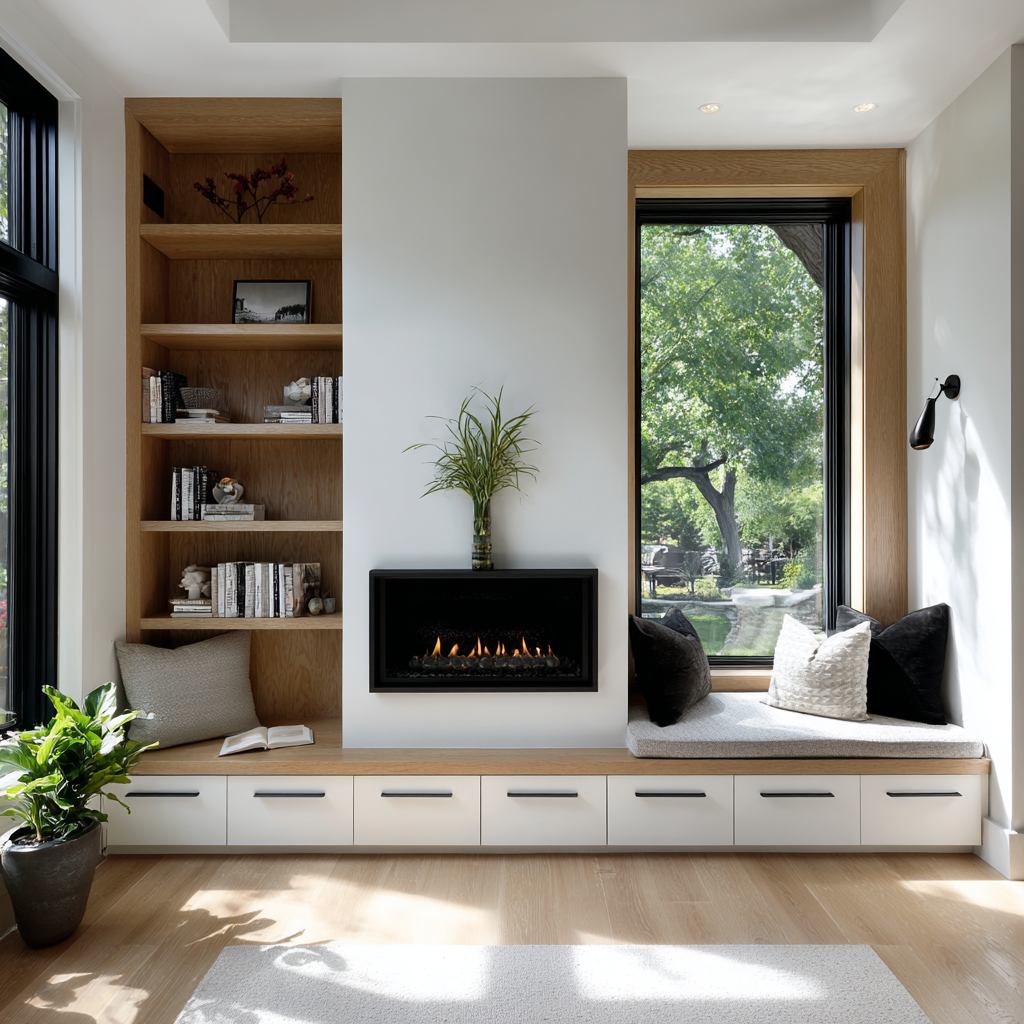
Custom built-ins add value when you design them around your daily flow, not catalog sizes. Start by measuring traffic paths, door swings, outlets, and HVAC, then define exactly what you’re storing and how you’ll access it. Focus ROI on high-friction zones like entries, kitchens, living rooms, and primary suites so storage looks architectural, not like furniture. Specify durable fronts, soft-close hardware, and integrated lighting with clean cable chases. Keep going to see planning, cost, and layout moves.
How to Plan Custom Built-Ins (Cost, Timeline, Installer)
Where do you start when you want built-ins that look seamless and function hard every day? You start with a measured space plan: map traffic flow, outlets, HVAC returns, and door swings, then define what you’re storing and how you’ll access it. Set a planning budget by itemizing cabinetry, finish, hardware, lighting, and any drywall or flooring touch-ups. Next, lock timeline milestones: design approvals, shop drawings, material lead times, fabrication, site prep, install, and punch list.
Choose an installer who coordinates trades and shows tolerance standards for scribe fits, reveals, and level lines. Ask for mockups, warranty terms, and change-order rules. Confirm who pulls permits and how dust control and room protection will work.
Where Custom Built-Ins Deliver the Best ROI
How do you decide which built-ins will actually pay you back? Start where buyers feel daily friction: entries, kitchens, living rooms, and primary suites. You’ll see the strongest built-in ROI when storage looks intentional and architectural, not like furniture shoved in.
Target high-visibility zones with measurable function: an entry bench with concealed shoe drawers, a kitchen pantry wall with appliance garages and pull-outs, a media/storage wall that hides cables and amplifies sightlines, or a closet system that doubles hanging and creates a dedicated hamper station. Specify durable fronts, soft-close hardware, integrated lighting, and outlet placement so the solution performs. Use niche customization to fit your circulation paths, door swings, and cleaning access. Keep finishes aligned with the home’s palette so the upgrade reads original, not added on.
Custom Built-In Bookshelves for Niches and Odd Walls
High-ROI built-ins solve daily friction, and few spots feel more wasted than a dead niche, a skinny wall run, or an awkward bump-out that rejects standard furniture. You can turn those constraints into a calibrated library wall with custom depths, scribed side panels, and adjustable shelves that land on your exact book heights.
Start by mapping sightlines, outlet locations, and door swing clearances so the unit reads intentional, not jammed in. In tight built ins niches, use shallower uppers for display and deeper lowers for reference books, files, or concealed gear. For odd walls storage, align shelf lines to window heads and trim, then integrate LED channel lighting and a cable chase for speakers or charging. Finish with paint-grade for seamless architecture or veneer for contrast.
Custom Built-In Benches for Entries, Bays, and Dining
Often, the fastest way to make an entry, bay window, or dining nook feel finished is to anchor it with a built-in bench that’s sized to your clearances, not a catalog. You’ll start by mapping traffic paths, door swings, and pull-out zones so bench seating never pinches circulation. In entry niches, you can set the seat height to 17–18 inches, keep the depth near 18 inches, and add a back or wall panel where coats won’t scuff paint. For bay windows, you’ll match angles precisely, then tune cushion thickness to keep sightlines open. In dining nooks, you’ll align bench length with table overhang and knee space, and specify durable, wipeable finishes so it performs daily, beautifully.
Custom Storage-Wall Built-Ins for Living Rooms and Offices
A well-planned storage wall can replace several freestanding pieces while making your living room or office feel calmer and more intentional. You’ll gain a single, measured composition that hides cords, frames views, and turns niches oddwalls into purposeful zones. Plan it like a system, not furniture, and you’ll see built-in ROI in daily ease and long-term value.
- Map functions: media, books, files, display, and a closed “mess” zone.
- Set proportions: align shelves to sightlines and maintain clear desk or sofa circulation.
- Integrate tech: ventilated cabinets, charging drawers, and dimmable task lighting.
- Specify finishes: durable fronts, acoustical panels, and hardware scaled to your grip.
You’ll store more, clean faster, and elevate the room’s architecture.
Conclusion
When you plan custom built-ins with clear costs, timelines, and the right installer, you turn tricky walls into purposeful space. You’ll get the best ROI when you use them daily—entries, living zones, and work areas. Fit bookshelves to niches, tuck benches into bays, and let a storage wall carry media, files, and display. Like a tailored suit, every inch aligns with your routines, sightlines, and storage needs—no wasted corners.