Mudroom Must-Haves for New England Winters: Layout, Storage, and Materials That Last
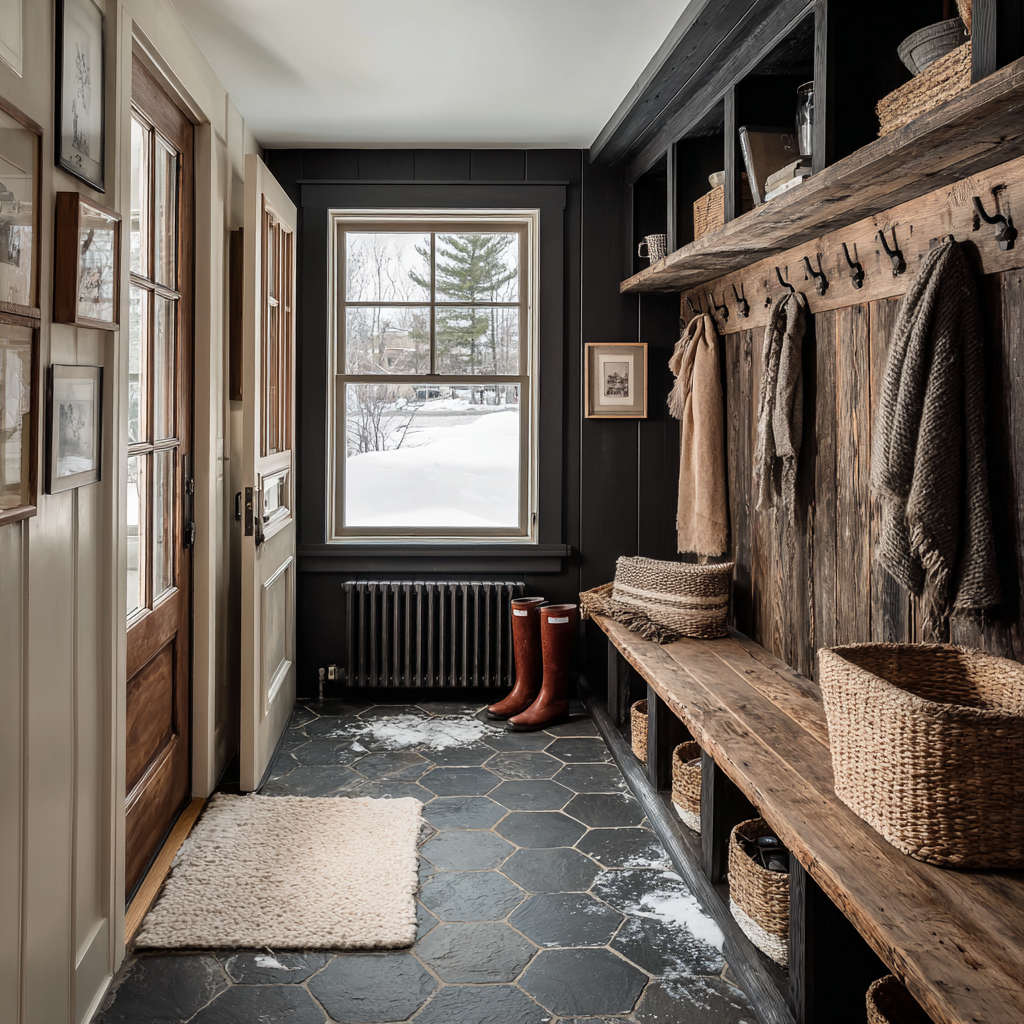
You’ll want a clear drop lane from the door to a boot bench so kids can strip snow pants without gridlock. Build vertical gear bays with staggered hooks, cubbies, and labeled bins, plus a separate adult zone. Choose slip-resistant porcelain or quarry tile with epoxy grout and salt-rated sealer, and protect walls with scrubbable paint or panels to 42–54 inches. Add deep boot trays, a ribbed drain mat, rust-proof hardware, and a key/mail shelf. Keep going for drying, drains, and small-space tricks.
Plan a Winter Mudroom Layout for Boots and Kids
Winter chaos—boots, backpacks, dripping mittens—needs a mudroom layout that controls water, grit, and kid traffic before it hits your floors. You’ll reduce bottlenecks by planning a clear “drop lane” from the door to the bench, with a turning radius that accommodates snow pants and a carried grocery bag.
Build kids’ gear zoning: assign each child a vertical bay with a hook row, cubby, and labeled bin, plus a low bench they can use independently. Add a separate adult zone so larger coats don’t crowd smaller items. For winter boot sizing, measure your tallest boots and allocate height plus airflow; include a pull-out tray zone sized for pairs, not singles. Place a grab-and-go shelf at shoulder height for hats and headlamps.
Choose Mudroom Flooring Built for Slush and Salt
When slush, sand, and road salt hit your mudroom daily, you need flooring that grips under wet boots and won’t stain or pit. You can choose slip-resistant tile for traction, or waterproof luxury vinyl plank for warmth underfoot and easy cleanup. Either way, you’ll only get long-term performance if you pair it with durable grout and quality sealants that block moisture and salt.
Slip-Resistant Tile Options
How do you keep a mudroom floor safe under a steady mix of slush, salt, and wet boots? You choose tile engineered for traction, fast cleanup, and winter abuse. Look for slip-resistant flooring with textured grip surfaces that stay surefooted when meltwater pools at the door.
- Porcelain tile with a matte, structured finish (DCOF-rated for wet areas) to resist slips and salt etching
- Unglazed quarry tile for rugged texture, high compressive strength, and dependable performance in freeze-thaw climates
- Small-format mosaics, where extra grout lines add bite underfoot and channel water toward a drain mat
Pair tile with epoxy or high-performance grout, seal where required, and specify a dark, variegated color that hides grit.
Waterproof Luxury Vinyl Plank
Where tile feels icy underfoot, waterproof luxury vinyl plank (LVP) gives you a warmer, quieter mudroom floor that still stands up to New England slush and road salt. Choose rigid-core planks with a high-wear layer (20 mil+) so grit from boots won’t haze the finish.
For true waterproof flooring performance, look for a fully waterproof core and tight locking joints that resist seepage from melting snow. Specify a textured, matte finish engineered for slip-resistant surfaces, especially near the door and bench. Run planks perpendicular to the entry for better traction and faster drying lines. Add a recessed boot tray or mat zone to capture brine before it migrates. You’ll get the look of oak or slate without cold shock or constant upkeep.
Durable Grout And Sealants
In a New England mudroom, grout and sealants often determine whether your “waterproof” floor stays tight or becomes a stain-and-odor trap after a few weeks of slush. If you’re pairing tile with a drain pan or setting porcelain over a slab, spec durable grout and treat joints like a system, not an afterthought. Choose rapid-cure, low-absorption formulas that resist salt bloom, freeze-thaw microcracks, and dirty meltwater. Then lock edges, corners, and transitions with high-performance products that flex without debonding—sealants durability matters most where boots pivot and water pools.
- Epoxy or hybrid grout for minimal porosity and fast cleanup
- Penetrating sealer rated for de-icing salts and wet cycles
- Color-matched, mold-resistant silicone at perimeters and thresholds
Use Wipeable Mudroom Walls and Trim
After a Nor’easter, your mudroom walls and trim take the first hit—salt spray, wet wool, gritty sand, and boot scuffs don’t stay on the floor. Design for cleanup speed: choose wipeable walls with high-build, scrubbable paint (satin or semi-gloss) or rigid panels like PVC beadboard, fiberglass-reinforced plastic, or sealed wood slats. Run protection higher than you think—42 to 54 inches—so backpacks and shovel handles can’t gouge drywall.
For trim materials, skip soft pine that dents and wicks moisture. Use cellular PVC, composite, or properly sealed hardwood with tight joints and back-primed edges. Add a durable base cap and corner guards where traffic concentrates. You’ll wipe grime off in seconds, not repaint every spring.
Pick Rust-Proof Hooks, Hinges, and Fasteners
Why do mudroom hooks and hinges fail first every winter? Salt spray, wet gloves, and melting snow create a nonstop electrolyte that pits cheap steel, loosens screws, and seizes pivots. You’ll stop the cycle by specifying marine-grade hardware where water lingers and temperature swings drive condensation.
- Choose 304/316 stainless or powder-coated aluminum rust-proof hooks with sealed mounting plates.
- Pair hinges with stainless pins and nylon or oil-impregnated bushings so doors don’t bind in freeze-thaw weeks.
- Install corrosion-resistant fasteners (stainless, ceramic-coated, or hot-dip galvanized) and predrill to prevent split trim and spinning heads.
Finish with a thin bead of clear sealant behind plates, and you’ll block moisture wicking into screw holes.
Add a Boot Bench With Under-Seat Storage
Add a boot bench so you’ve got a dry, stable place to pull off wet snow boots without tracking slush through the house. Choose a lift-top bench for quick under-seat storage of boot trays, traction cleats, and spare gloves, and make sure the hinges and lid can handle daily freeze-thaw humidity. Built-in storage cubbies below to separate pairs, speed up drying, and keep salt grit from piling up on the floor.
Lift-Top Boot Bench
Where do you drop slushy boots and heavy parkas without soaking the whole entry? Choose a lift-top boot bench that seals clutter, speeds cleanup, and gives you a dry perch for lace-ups. Look for marine-grade plywood or powder-coated steel hinges, plus a moisture-tolerant finish that won’t blister from salty melt. Add a removable storage bin inside so grit doesn’t grind into corners, and you can dump it outside fast.
- Vent slots or a perforated false bottom to air-dry boots
- Soft-close lid support to prevent slammed fingers in gloves
- Raised, gasketed base or adjustable feet to stay above puddles
Pair it with a drip tray liner and washable seat cushion, and your entry stays winter-proof.
Built-In Storage Cubbies
In a New England winter, built-in storage cubbies keep wet gear contained and circulating air so moisture doesn’t linger. Size each bay for bulky parkas and ski helmets, then add a vented back panel or slotted shelf to speed drying. Specify marine-grade plywood, sealed edges, and a washable liner where salt spray collects, and you’ll stop swelling and delamination.
Add a boot bench with under-seat storage so you can sit, lace up, and slide mittens, traction cleats, or pet towels into pull-out bins. Use powder-coated hooks, stainless fasteners, and a drainable rubber mat at the toe-kick. Integrate motion lighting and a small quiet fan for smart airflow—an innovative two-word idea, two-word idea.
Build Cubbies Sized for Real Winter Gear
A well-sized cubby system keeps New England winter chaos from spilling into the house because it’s built around bulk, not wishful thinking. Start your cubby design by measuring real coats, bibs, and helmets, then add clearance for wet loft and frozen zippers. For gear sizing, plan wider bays (14–18 inches) and taller openings (22–26 inches), so puffers don’t compress, and seams don’t strain. Use marine-grade plywood or sealed maple, plus a moisture-tolerant backer, so slush and salt can’t wick into joints. Add ventilation gaps and removable trays to speed drying and protect finishes.
- Full-height boot slot with drip pan
- Deep upper shelf for mittens, liners, goggles
- Reinforced hooks mounted into blocking, not drywall
Create a Drop Zone for Keys, Bags, and Mail
You’ll keep winter chaos contained when you set a dedicated drop zone right by the door, so wet gloves don’t bury your keys and mail. Mount a sturdy key organizer at hand height and pair it with a mail-and-bag drop shelf that can take daily slush, grit, and heavy totes. Choose wipe-clean, moisture-resistant materials and secure hardware into studs so it won’t loosen during the long New England season.
Wall-Mounted Key Organizer
Where do keys, bags, and mail land when everyone barrels in from a sleet-soaked driveway? Lock in a wall-mounted key organizer so you don’t track chaos deeper into the house. Place it at shoulder height, near the door swing line, to protect your mudroom layout and keep wet gloves from grazing the walls. Choose powder-coated steel or sealed hardwood that won’t swell with freeze-thaw humidity, and use stainless screws into studs so it won’t loosen after a winter of tugging. Add smart labeling or NFC tags for quick handoffs.
- Deep hooks that won’t bend under loaded key rings
- A magnetic strip for fobs that hate pockets
- A wipe-clean backer that resists salt spray
Mail And Bag Drop Shelf
How fast can a simple drop shelf stop the winter pileup of mail, backpacks, and soggy mittens at the door? Install a narrow ledge at shoulder height, right above your boot zone, so you unload before slush hits the floor. Choose sealed hardwood, powder-coated steel, or compact laminate that shrugs off wet gloves and salty drips. Add a raised lip to keep envelopes from sliding, plus divided slots for mail storage: “in,” “to pay,” and “to file.” Under-shelf hooks or a slim rail deliver bag organization without snagging puffer straps. Integrate a wipeable tray for keys and a small charging nook with a gasketed outlet cover. Keep fasteners stainless and mount them into studs for years of winter abuse.
Control Wet Gear With Mats, Trays, and Drains
After a Nor’easter dumps slush on your boots and snow melts off your parka, wet gear turns a mudroom into a puddle factory fast. Build wet-gear control into the floor zone so water is captured before it reaches trim, drywall, or hardwood.
Choose systems that stay stable in freeze-thaw cycles and won’t crack or curl:
- Deep, raised-edge boot trays in polypropylene or galvanized steel to corral meltwater and grit
- A ribbed entry mat with true mat drainage channels, sized wall-to-wall at the door swing
- A linear floor drain or trench drain set in tile or sealed concrete, pitched 1/8″ per foot
Seal seams, caulk transitions, and slope surfaces toward collection points. You’ll protect finishes and shorten cleanup time.
Dry the Space With Heat, Ventilation, and Airflow
Capturing meltwater with mats, trays, and drains keeps the mess contained, but you still need the room to dry fast between storms. Add controlled heat: a low-profile baseboard, radiant floor zone, or ductless head set to a short “dry-out” schedule so you don’t bake the house. Seal gaps, insulate exterior walls, and weatherstrip the door to boost heat efficiency while preventing cold-surface condensation. Then move the air on purpose. Install a quiet, timered exhaust fan rated for cold climates, and give it a dedicated make-up air path so it actually pulls moisture out. Use airflow design that sweeps past boots and coats—register placement, transfer grilles, or a small circulation fan—so corners don’t stay damp and finishes last.
Make a Small Entryway Work Like a Mudroom
Where do you put wet boots, slushy gloves, and a dripping parka when your “mudroom” is really just a three-foot slice of entry? You design it like a micro-lab: control meltwater, speed drying, and keep traffic moving. Start with a high-lip tray or porcelain tile insert that encourages ice shedding, then add a narrow bench with a lift-up bin for hats and mitts. Mount hooks at staggered heights so coats don’t stack damp.
- Vertical wall rails with adjustable hooks and baskets
- A boot mat plus an under-bench rack with boot sizing zones
- A slim, wipeable cabinet for salt, deicer, and dog gear
Choose fiberglass-reinforced wall panels and stainless fasteners so freeze-thaw grit won’t chew them up.
Conclusion
You plan your layout for boots and kids, and that same night the first nor’easter hits—suddenly every hook, bench, and tray earns its keep. You choose slush-proof flooring, wipeable walls, and rust-proof hardware, and the salt line stops creeping. You add a boot bench with under-seat bins, and mittens land where they should. You set a drop zone, and keys appear on time. You dry the air, and the room stays solid.
Frequently Asked Questions
Here are 10 highly practical, SEO-optimized FAQs written in a helpful, conversational tone. They are tailored specifically to building a high-durability mudroom that can survive harsh New England winters, based on the material selection and functional layout strategies referenced in your guide.
1. What is the ideal layout for a highly functional New England mudroom?
The best mudrooms follow a logical, step-by-step traffic flow that matches how your family actually enters the house. The golden rule is to place features in the exact order you take things off:
- The Landing Zone: A durable bench to sit down immediately and remove wet boots.
- The Drop Zone: Drop hooks directly above or next to the bench for heavy coats and bags.
- The Containment Zone: Lower cubbies or boot trays under the bench to catch melting snow, followed by upper bins for dry accessories like hats and gloves.
2. Why are individual lockers or cubbies better than a single open closet?
An open closet quickly turns into a mountain of tangled coats and missing shoes. Individual cubbies or lockers assign accountability—every family member gets their own designated “zone.” It keeps everyday gear separated, prevents wet items from burying dry ones, and makes it incredibly easy for kids to find their specific school bags or winter boots during the hectic morning rush.
3. What flooring materials hold up best against New England winter slush and salt?
Winter boots bring in a destructive mix of freezing water, gritty mud, and corrosive road salt. To prevent floor warping or staining, skip the hardwood and choose high-durability materials:
- Porcelain Tile: Incredibly dense, scratch-resistant, and entirely waterproof.
- Natural Slate: Offers a classic, rustic New England look with a naturally textured slip-resistant surface.
- Luxury Vinyl Planks (LVP): A budget-friendly, 100% waterproof option that mimics wood but won’t swell or buckle when wet.
4. How do custom wood built-ins survive wet jackets and snowy boots without rotting?
Standard furniture made from cheap fiberboard (MDF) or particleboard will quickly soak up water, swell, and fall apart. Custom mudroom built-ins built by a professional carpenter use water-resistant materials like marine-grade or exterior-grade plywood for the cabinet boxes. They are finished with heavy-duty, moisture-barrier coatings—such as conversion varnishes or specialized polyurethane paints—that completely seal the wood against water damage.
5. Hooks vs. Hangers: Which is better for hanging winter coats?
For a high-traffic family mudroom, hooks win every single time. No one—especially kids—takes the time to properly zip up a heavy winter parka and slide it onto a coat hanger when coming inside from the freezing cold. Heavy-duty, double-pronged metal hooks allow family members to quickly throw a jacket or backpack up with one hand, ensuring gear actually gets hung up instead of dropped on the floor.
6. How can I keep my mudroom warm and help wet gear dry faster?
To prevent a mudroom from feeling like an icebox and to speed up drying times, look at your mechanical and heating layout:
- Radiant In-Floor Heating: The ultimate luxury for a New England mudroom. It keeps your feet warm and rapidly dries out wet boots and melting snow sitting on the floor.
- Dedicated HVAC or Mini-Splits: Ensure the room has a dedicated heating vent or a small ductless mini-split to maintain air circulation and keep the ambient temperature stable.
7. What type of ventilation is required to prevent a mudroom from smelling musty?
A pile of damp wool coats, wet boots, and snow pants will quickly create a stagnant, musty odor if the air is trapped. If your mudroom doesn’t have a window you can crack open, installing a high-efficiency exhaust fan (similar to a bathroom fan) tied to a moisture sensor or timer is highly recommended. This pulls the humid, damp air out of the room and exhausts it completely outside, keeping the air fresh.
8. How deep should custom mudroom lockers and benches be?
Proper dimensions prevent your custom carpentry from feeling cramped or sticking out into walkways:
- Mudroom Benches: Should be 18 to 21 inches deep and sit roughly 18 inches off the ground. This provides a comfortable seat depth for adults to bend over and tie shoes.
- Lockers/Cubbies: Should be 15 to 18 inches deep. Going any shallower means bulky winter parkas and large backpacks will spill out past the face of the cabinets, blocking your walking path.
9. Can I convert a standard closet or laundry room into a functional mudroom?
Yes! If your home doesn’t have a dedicated entryway room, a finish carpenter can easily rip out a standard, underutilized hallway closet, remove the doors, and build a custom, recessed “bench and cubby” unit directly into the wall framing. This maximizes your existing square footage without requiring a structural home addition.
10. What is a “boot tray,” and how should it be integrated into the woodwork?
A boot tray is a shallow, lipped tray designed to catch the heavy drips, mud, and road salt from the bottom of your winter footwear. To keep your mudroom looking clean and high-end, custom cabinetry can be designed with open-bottom floating benches. This allows you to slide sleek, matching rubber or copper boot trays entirely underneath the bench structure, keeping the messy dripping out of sight while preserving your walking space.