New England Moisture Control: Waterproofing, Ventilation, and Materials That Prevent Mold
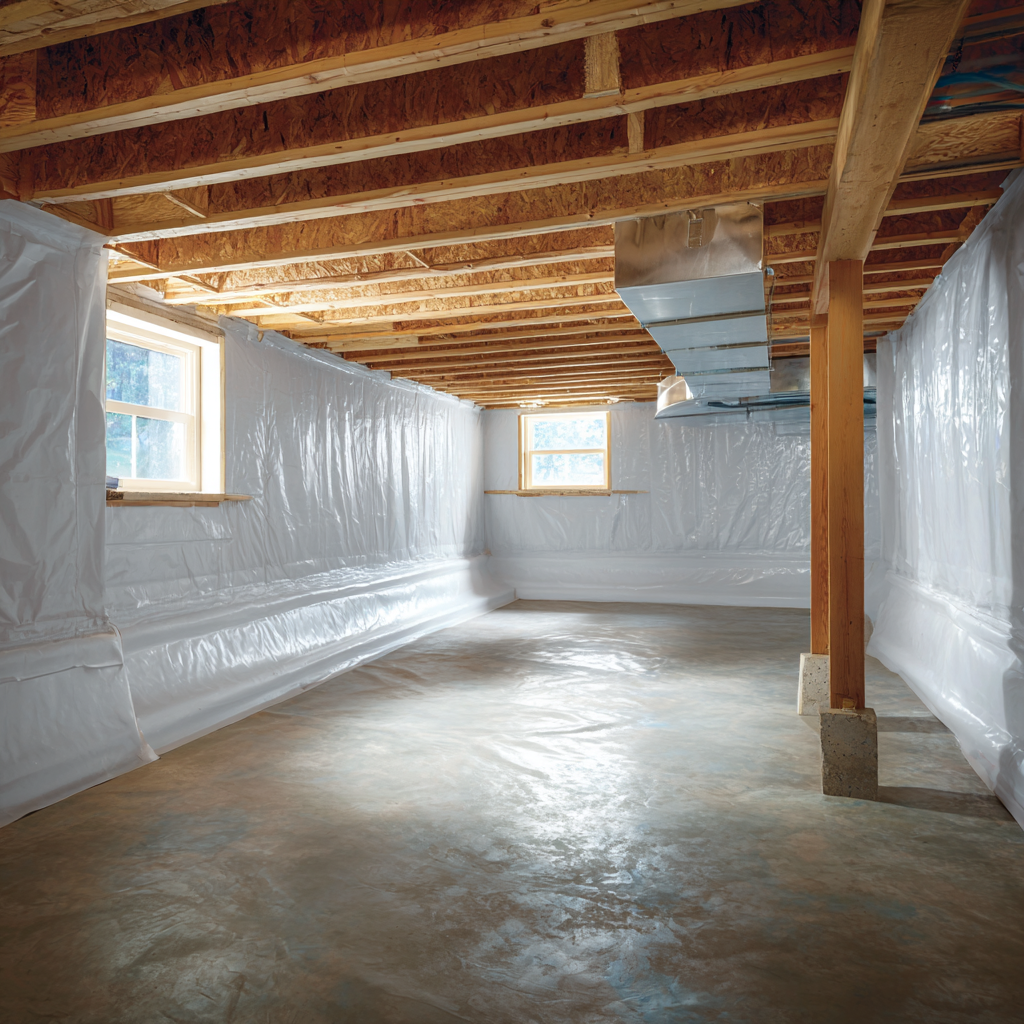
In New England, you’ll prevent mold by identifying the moisture source first: bulk leaks leave repeatable rain-driven streaks and efflorescence, while condensation forms on cold rim joists and behind stored items. Log RH at slab level and near joists for a week; aim for 30–50% in winter and under 60% in summer, with wood below ~16% MC. Then fix grading, gutters, and downspouts, air-seal bypasses, and choose inorganic, foam-based basement assemblies—more details follow.
Start Here: Diagnose Moisture (Leaks vs Humidity)
Where’s the moisture actually coming from—bulk water leaks or humidity condensing out of the air? Start with a diagnostic mindset: map pathways, not symptoms. Trace stains upward and outward; leaks usually show gravity-driven streaking, localized efflorescence, and repeatable wetting after rain or snowmelt. Condensation clusters at moisture hotspots: cold rim joists, uninsulated foundations, metal fasteners, and behind stored items where airflow stalls. Look for mold gradients that fade with distance from cold surfaces, and for rusty nails or peeling paint at thermal bridges. Check exterior grading, downspouts, and flashing continuity, then inspect plumbing chases and HVAC drains for point-source wetting. Your goal is to classify the source before you prescribe waterproofing or ventilation.
Measure It: Humidity Targets and Cheap Tools
How do you know whether your basement needs waterproofing, more ventilation, or just better air-sealing if you’re not measuring anything? Start with humidity testing: put a $10–$20 digital hygrometer at slab level and another near the joists, then log readings for a week. Target 30–50% RH in winter to limit condensation, and stay under 60% RH in summer; above 65% for days pushes many materials into the mold-growth zone. Add a Bluetooth sensor for trendlines and alerts. Use inexpensive mold indicators too: a pinless moisture meter for wood (keep framing under ~16% moisture content), plus a surface temp probe to spot dew-point risk. Data tells you which lever to pull fast.
Fix Grading, Gutters, and Downspout Discharge
After you measure indoor humidity, you’ll get faster moisture reduction by controlling the water that hits your foundation first. You should grade soil to slope away from the house, keep gutters clean and correctly sized for your roof area, and fix leaks so runoff doesn’t spill at the wall. You’ll also need to extend downspout discharge well away from the foundation (or into a tightline to daylight), so water can’t recycle into your basement and crawlspace.
Proper Yard Slope
In New England, moisture problems often start outside the foundation, so proper yard slope and roof drainage matter more than most interior “waterproofing” fixes. Your yard slope reasoning should follow physics: move water away before it builds hydrostatic pressure at the wall.
Target a drainage slope of about 5% (6 inches of fall over 10 feet) for the first 10 feet from the house, where feasible. Regrade with compacted, low-permeability fill (clayey loam) and finish with topsoil, maintaining siding and trim clearance. Avoid reverse slopes created by settled backfill, patios, or walkways; laser levels or smartphone LiDAR scans can quickly map micro-depressions. Extend the downspout discharge well past the backfill zone via a solid pipe to daylight or a dry well, so surface flow doesn’t recycle to the footing.
Clean, Sized Gutters
Gutters are the first-line hydraulic system that keeps roof runoff from saturating your backfill and loading your foundation wall with hydrostatic pressure. If they overflow, water sheets down siding, ponds at the footing zone, and drives capillary uptake in masonry—conditions that elevate basement RH and mold risk.
You’ll get better control with clean gutters and correctly sized gutters matched to roof area, pitch, and local rainfall intensity. Verify capacity by checking gutter profile (5″ vs 6″), outlet size, and hanger spacing so the trough doesn’t sag and form low spots. Clean twice per year, and after nor’easters, so leaves don’t create dams that force overflow. Add leaf screens only if you’ll still inspect; clogged screens fail quietly. Seal joints, pitch 1/16″ per foot, and correct leaks fast.
Extend Downspout Discharge
Most basement moisture problems start with roof runoff that lands too close to the foundation, saturates backfill, and drives hydrostatic pressure and capillary wicking into concrete or masonry. You’ll cut that load fastest by extending downspout discharge at least 6–10 feet away, or into a tightline that daylights on a safe grade. Use smooth-wall SDR-35 or Schedule 40, solid pipe (not perforated), and add a cleanout plus a pop-up emitter to prevent freeze blockages. Verify the outlet won’t erode soils or dump near sidewalks.
Pair extensions with a measurable yard slope: aim for about 5% (6 inches drop over 10 feet) away from the house. When roof water leaves the foundation zone, interior humidity follows.
Yard and Footing Drainage for New England Rains
Why does mold keep returning even after you seal cracks and run a dehumidifier? Because New England’s heavy rains and freeze-thaw cycles keep reloading your foundation with groundwater. Start with yard drainage: regrade soil to slope 6 inches over the first 10 feet, cap with low-permeability clay, and keep mulch thin near the wall. Add a swale or trench drain to intercept sheet flow before it reaches the basement zone. For footing drainage, confirm the exterior perimeter drain exists, sits at or below the footing, and discharges to daylight or a reliable storm connection. Use washed stone and a geotextile wrap to prevent silt clogging, and protect the wall with a dimpled drainage mat.
Basement Moisture Control: Interior Drainage Options
Even with perfect grading and a working exterior footing drain, New England basements can still take on water when hydrostatic pressure rises and seepage finds the wall–slab joint or small cracks. You can manage it with interior drainage that intercepts water at the perimeter and relieves pressure under the slab. A trenched channel with perforated pipe in washed stone, wrapped in filter fabric, routes flow to a sealed sump; a wall dimple mat can guide seepage down without trapping it behind finishes. Choose a sump basin with an airtight lid, check valve, and high-water alarm. For resilience, add a battery or water-powered backup. Get sump pump sizing right by estimating peak inflow and lift, then selecting a pump that meets that curve, not just horsepower.
Crawlspace Moisture Control: Seal, Vent, or Condition?
In a New England crawlspace, should you vent it, seal it, or fully condition it? Field data and building-science guidance show venting often raises summer humidity as warm air hits cool surfaces, driving condensation. You’ll usually get better control by sealing: install continuous vapor barriers over soil, lap and tape seams, and run them up piers and walls. Add crawlspace seals at rims, penetrations, and the access door, then manage bulk water with perimeter grading and a sump if needed. If you need the lowest RH and better energy performance, condition the space: insulate walls, provide a small supply/return or dedicated dehumidifier, and monitor RH with sensors. Target 45–55% RH to suppress mold and corrosion year-round.
Air Sealing and Attic Moisture: Stop Condensation
You’ll stop most attic condensation by sealing air leaks at the ceiling plane first, because warm, moisture-laden indoor air drives vapor transport through bypasses. After you’ve air-sealed, you can balance soffit and ridge (or gable) ventilation so airflow flushes residual moisture without pulling conditioned air into the attic. This sequence reduces frost on sheathing, limits mold risk, and improves energy performance in New England’s long heating season.
Seal Air Leaks First
A damp New England attic usually starts with air leakage, not a “roof problem.” Warm, moisture-laden indoor air escapes through gaps around attic hatches, recessed lights, plumbing and wiring penetrations, and top plates; once it hits cold roof sheathing, it cools below its dew point and condenses into liquid water.
To fix it, you’ve got to seal air pathways—leaks first—before you add insulation or chase mold. Diagnose moisture with data: spot staining and frost lines, then confirm with a blower door and smoke pencil to map bypasses. Air-seal with fire-rated foam or caulk at penetrations, gasket the hatch, and build airtight covers over recessed cans. Finally, verify: rerun the blower door and track attic RH and sheathing temps to ensure condensation risk drops.
Manage Attic Ventilation Balance
Why do some New England attics stay wet even after you’ve sealed bypasses? Because ventilation can still drive condensation when intake and exhaust aren’t in attic balance. Wind and stack effect create uneven vent pressure, pulling moist indoor air through tiny leaks or short-circuiting airflow from ridge to soffit. You’ll fix it by tuning the system, not just adding vents.
- Verify soffit intake is clear and sized to match exhaust; aim for a near 50/50 net-free area split.
- Measure attic-to-house pressure with a manometer; negative attic pressure signals excessive exhaust or blocked intake.
- Prevent bypass re-entry: baffle insulation, seal top plates, and maintain a continuous air barrier at the ceiling plane.
Ventilation That Works: Bath, Kitchen, and Dryers
In New England homes, where wintertight envelopes and long shower seasons trap moisture indoors, ventilation has to move measured air—not just make noise. Ignore ventilation myths: “any fan works” or “run it during showers only.” Specify bathroom fans by tested airflow at 0.25 in. w.g., aim for 50–80 cfm intermittent (or 20–30 cfm continuous), and duct them smooth-wall, insulated, and short to a roof or wall cap with a backdraft damper. Use a timer or humidity-sensing control so you clear moisture after bathing. In kitchens, choose a range hood that actually vents outdoors and captures the plume; keep the run straight and sized to the hood. For dryers, install rigid metal ducting, seal joints, and vent outdoors—never to an attic.
Dehumidifiers and HVAC: Sizing and Setpoints
After you’ve got spot ventilation working, you still need equipment that can hold indoor relative humidity in the safe range for mold control. You’ll get better results when you size a dehumidifier by measured moisture load and operating conditions—not just square footage—so it can actually maintain target RH without short-cycling. Then you’ll set your HVAC/dehumidifier controls to realistic humidity setpoints (typically ~30–50% RH, adjusted for outdoor temperature and condensation risk) and verify performance with a hygrometer.
Proper Dehumidifier Sizing
How big should your dehumidifier be for a New England basement or crawlspace? Start with measured load, not square footage. Do a 48-hour data log of RH and temperature, then translate moisture removal needs into pints/day at 80°F/60%RH (AHAM) and derate for cooler basements. For reliable dehumidifier sizing, you want margin for spring melt, bulk-water events, and low-airflow corners while still hitting humidity targets without short-cycling.
- Volume + enclosure**: calculate cubic feet, insulation, and vapor barrier continuity.
- Moisture sources**: damp slab, fieldstone, sump cycling, dryer or bath exhaust.
- Drain strategy**: gravity to sump or pump; avoid buckets to prevent overflow.
HVAC Humidity Setpoints
Where should you set humidity when your HVAC and dehumidifier both influence basement or crawlspace conditions? Target 45–50% RH year-round, with a lower bound near 40% to reduce mold risk and an upper bound of 55% to limit dust mites. Use one control point: place a calibrated RH sensor in the space, not at the return, and let the dehumidifier be the primary controller in cooling season when the air handler may short-cycle. Set your HVAC humidity control (if available) 5% higher than the dehumidifier so they don’t fight. In winter, raise setpoints moisture to 50–55% only if condensation doesn’t form on cold rim joists or ducts. Verify with data logging and adjust.
Mold-Resistant Basement Materials and Red-Flag Symptoms
In New England basements, mold doesn’t usually start with a dramatic leak—it starts when materials stay above roughly 60% relative humidity long enough for spores to colonize. Choose basement materials that don’t store moisture: closed-cell spray foam on rim joists, rigid foam plus taped seams on walls, inorganic subfloor panels, and fiberglass-faced (not paper-faced) gypsum. Track mold indicators early: musty VOC odor, surface tackiness on cold masonry, and recurring condensation lines at sill plates.
- Swap carpet for interlocking polymer tiles over a dimpled drainage mat.
- Use borate-treated framing and stainless fasteners where splashback occurs.
- Validate with sensors: dew point alarms and pinless moisture scans after storms.
If you see efflorescence, peeling coatings, or darkened fasteners, you’ve got a moisture pathway to fix.
Conclusion
You’ll beat New England moisture when you treat it like a system, not a single leak. Measure RH and keep it near 30–50%, then stop bulk water with grading, gutters, and proper downspout discharge. Add drainage where hydrostatic pressure occurs, seal air leaks to prevent cold-surface condensation, and use ducted exhaust correctly. Size dehumidification to your load and choose mold-resistant materials. Maintain it—like tuning a car—so small issues don’t become rot.
Frequently Asked Questions
1. Why is moisture control so uniquely challenging for homes in New England?
New England has a “mixed-humid” climate, meaning our homes experience extreme weather swings. In the winter, it’s freezing outside and warm inside; in the summer, it’s blazing hot and dripping with humidity. This forces moisture to move through your home’s walls in opposite directions depending on the season. Without a precisely engineered building envelope, this trapped moisture turns into condensation, leading to hidden wood rot and toxic mold growth.
2. What is a “building envelope,” and how does it protect my home?
The building envelope is the continuous physical barrier that separates the conditioned air inside your home from the unconditioned elements outside. It includes your roof, subfloors, exterior walls, windows, and doors. A high-performance envelope relies on a dedicated weather-resistive barrier (WRB)—like advanced house wraps or liquid-applied flashings—to keep liquid water out while still allowing vapor to escape so your house can “breathe.”
3. What is the difference between water mitigation and waterproofing?
While they sound similar, they handle water at completely different stages:
- Water Mitigation: Focuses on managing water after a leak or flood, using industrial dehumidifiers, air movers, and moisture meters to dry out framing before mold sets in.
- Waterproofing: The proactive installation of continuous membranes, flashing tapes, and drainage planes during construction to ensure water never penetrates the building envelope in the first place.
4. How do I choose between vapor-permeable and vapor-impermeable materials?
Using the wrong material can trap water inside your walls and ruin your framing.
- Vapor-Permeable Barriers: Allow moisture vapor to pass through so wet building materials can dry out. They are typically used on exterior walls.
- Vapor-Impermeable Barriers: Completely block vapor movement. These are critical in high-moisture zones—like behind bathroom tile or sealing a basement concrete slab—to prevent moisture from migrating into dry structural framing.
5. Why is a “rain screen” system essential for modern New England siding?
Modern homes are built incredibly airtight, which means if water gets behind your siding, it can’t dry out on its own. A rain screen creates a deliberate, 1/4-inch to 3/4-inch air gap between your exterior house wrap and your actual siding boards using furring strips. This gap uses gravity to drain any water that sneaks past the siding and natural convection to rapidly dry out residual moisture.
6. How does subfloor waterproofing protect my hardwood or tile flooring?
Concrete slabs and plywood subfloors naturally hold moisture. If you lay down expensive hardwood or tile directly over a damp subfloor, the moisture will migrate upward, causing wood planks to cup and warp or tile grout to crack. Installing a dedicated uncoupling membrane or a vapor-barrier underlayment isolates your finished floor from the subfloor, locking out moisture and protecting your investment.
7. What are the legal ventilation requirements to ensure healthy indoor air quality?
To prevent mold growth and maintain healthy indoor air, building codes require strict mechanical ventilation rates. Bathrooms must have dedicated exhaust fans rated for the room’s cubic feet per minute (CFM), venting entirely outside. For highly sealed modern renovations, codes often require whole-house ventilation systems—such as Heat Recovery Ventilators (HRVs)—to continuously exchange stale, humid indoor air for fresh outdoor air without losing energy.
8. What are antimicrobial building materials, and where should they be used?
Antimicrobial building materials are treated during manufacturing to actively resist the growth of mold, mildew, and bacteria. In moisture-prone zones like bathrooms, kitchens, and basements, a custom contractor will use fiberglass-faced drywall (instead of paper-faced paper, which mold loves to eat), mold-resistant framing lumber, and specialized grout infused with antimicrobial agents.
9. How does proper insulation installation prevent winter ice dams?
Ice dams are a massive source of winter water damage in New England. They occur when warm indoor air escapes into your attic, heating the roof deck and melting the snow above. That melted water runs down to your cold gutters, where it freezes into a solid block of ice, backing up water directly under your roof shingles. Preventing this requires continuous air sealing and thick, code-compliant insulation (such as spray foam) to keep your attic floor completely isolated from your living space’s heat.
10. Why is a basement concrete floor a major source of hidden home humidity?
Concrete is highly porous—it acts exactly like a giant hard sponge. Liquid water and vapor from the soil beneath your home are constantly being drawn upward through the concrete slab in a process called capillary action. If your basement doesn’t have a thick poly vapor barrier laid down beneath the concrete slab before it is poured, moisture will continually evaporate into your basement air, spiking your home’s humidity and creating a breeding ground for mold.