Mudroom Ideas for New England Winters: Storage That Works
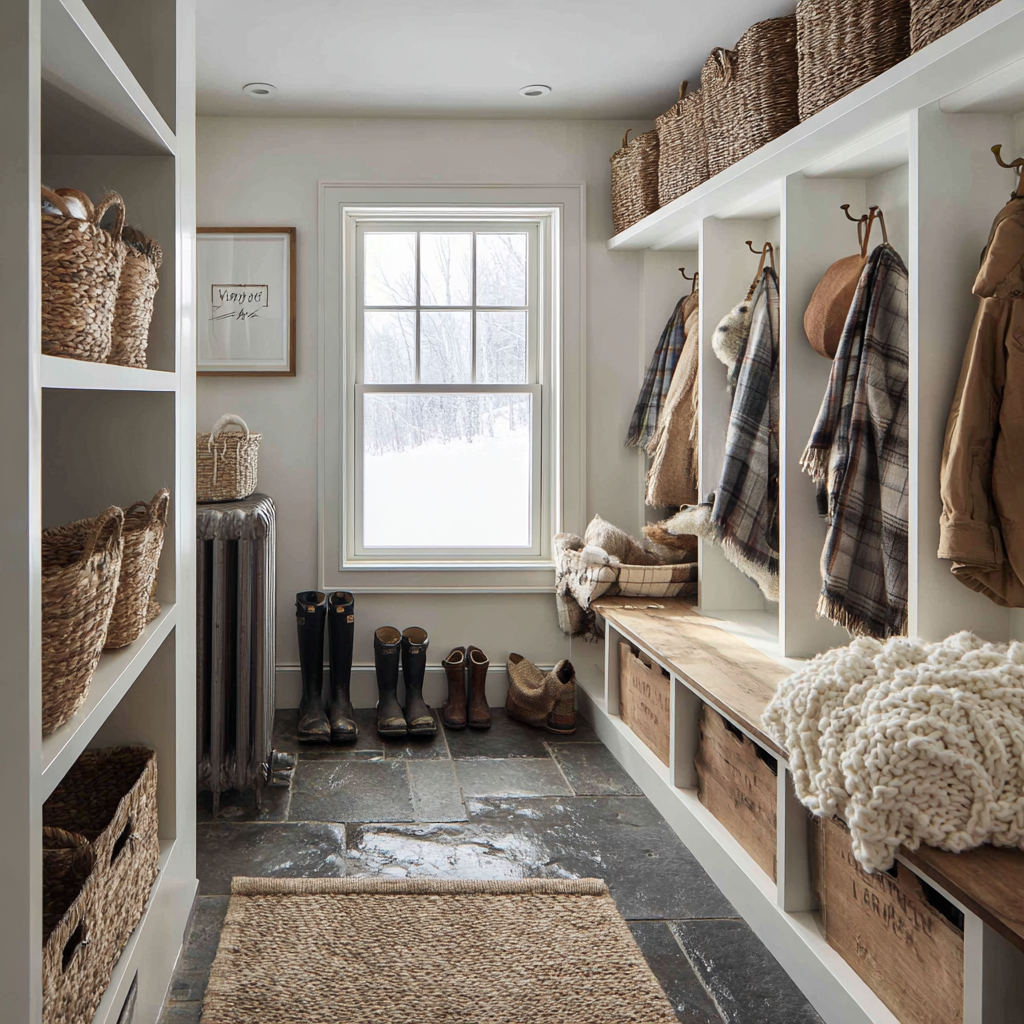
For a New England winter mudroom that actually works, start with durable tile or luxury vinyl floors in darker tones and seal the grout to resist salt. Create a straight path from door to hall with hooks at two heights, open cubbies for boots, and closed cabinets for visual calm. Use trays, boot grates, and wall outlets for dryers to handle slush. Add bright, wipeable lighting and outdoor-grade rugs. Next, you’ll see how to pull these into a cohesive, hardworking space.
Designing a Layout That Handles Winter Traffic
When you’re planning a mudroom for a New England winter, start by mapping how snow-covered boots, dripping coats, and bags actually move through the space. Stand in your entry and trace that traffic: door swing, drop zone, hang zone, then storage. Prioritize space optimization by stacking functions vertically—hooks over benches, cubbies over radiators, ceiling-height cabinets for off-season gear.
Carve out a linear path from the exterior door to the interior hall so wet layers never cross into the living areas. Use open storage at kid height and closed cabinets for visual calm. Integrate niches for baskets, charging trays, and labeled bins. Reserve one flexible zone for rotating seasonal decor—winter greens, spring umbrellas, summer beach bags—so the mudroom always feels intentional, not improvised.
Durable Floors and Finishes That Stand Up to Salt and Slush
Because New England winters mean weeks of melting snow and road salt underfoot, your mudroom floors and finishes have to act like a workhorse, not a show pony. You’ll want durable materials first: porcelain or ceramic tile with a textured finish, commercial-grade luxury vinyl tile or plank, or sealed concrete with a high-performance, non-slip topcoat. Skip soft woods and cheap laminate; they’ll swell, stain, and chip.
Prioritize dark, salt-camouflaging tones and tight grout joints sealed with an epoxy or penetrating sealer. Run flooring a few inches up the wall as a curb to contain slush. Add wall hooks and millwork finished in scrub-resistant paint or marine-grade varnish. For maintenance tips, set a cleaning schedule: quick daily mop, deeper neutral-pH wash weekly.
Smart Boot and Shoe Storage for Snowy Days
Sturdy floors only go so far if boots and shoes still drip salt and slush everywhere, so smart storage has to work just as hard as your finishes. In a New England mudroom, you need elevated grates or slatted racks so meltwater drains into washable trays, not across the tile.
Prioritize boot drying with wall-mounted or under-bench dryers that move warm air through liners—ideal after shoveling or skiing. Pair them with open wire shelves so air circulates and everything actually dries by morning.
For shoe organization in tight spaces, use vertical cubbies or pull-out toe-kick drawers under benches. Reserve the lowest, deepest slots for tall snow boots, and keep everyday shoes at hand-height so winter entrances stay fast and orderly.
Coat, Hat, and Mitten Organization for the Whole Family
Even in a compact New England mudroom, you can keep every coat, hat, and mitten in its place with the right hardware and layout. Start by installing two hook heights: lower rows for kids, higher ones for tall parkas and damp ski shells. Choose heavy-duty, rust-resistant hooks that can handle wet wool and down.
Use slim wall-mounted rails with labeled clips or carabiners for mittens and gloves; they dry faster and don’t vanish in a shared basket. Add narrow over-door racks for hats and headlamps, reserving prime wall space for bulkier coats.
For true family-friendly solutions, rotate items with clear bins dedicated to off-duty gear—your seasonal storage for lighter jackets or backup mittens—so only active winter layers live in daily reach.
Built-In Cubbies, Lockers, and Benches for Everyday Gear
Hook layouts keep outerwear under control, but built-ins turn a New England mudroom into a true workhorse. Think in columns: a locker for each person with a bench below and cubbies stacked above. You’re not just adding storage; you’re creating a daily landing zone that survives slush, salt, and school schedules.
Prioritize durable materials—painted hardwood, marine-grade plywood, or moisture-resistant composites—so wet gear doesn’t warp your investment. Use creative storage solutions, such as pull-out boot trays under the bench and slim vertical dividers for trays, skate bags, or tote bags. Focus on maximizing vertical space: run cabinetry to the ceiling, add upper lockers for off-season gear, and integrate narrow side cubbies for umbrellas, trekking poles, and folded snow shovels.
Heating, Ventilation, and Drying Solutions for Wet Weather
When New England slush follows you indoors, smart heating and ventilation keep your mudroom from turning into a damp, musty corner of the house. You’ll want heating options that warm surfaces, not just air: radiant floor heat, low-profile toe-kick heaters beneath built-ins, or a hydronic panel on an exterior wall, all dry boots faster and fight ice melt puddles.
Pair that with targeted ventilation systems. A small, humidity-sensing exhaust fan clears damp air after storms, while a through-wall unit or ERV can exchange stale air without wasting heat. Add ceiling or wall-mounted circulation fans to move warm air into alcoves and cubbies. For serious gear, integrate wall outlets for boot dryers and heated drying racks inside ventilated closets.
Weatherproof Entries: Rugs, Mats, and Doorway Details
A New England mudroom works hardest right at the threshold, where snow, sand, and road salt first cross the line. You start by zoning the entry: an aggressive scraper mat outdoors, then a low-profile, high-absorbency runner inside. Prioritize weather-resistant materials—rubber-backed polypropylene, recycled plastic weaves, or commercial-grade cocoa fiber—that won’t curl, freeze to the step, or trap moisture against your floor.
Size mats to span the full swing of the door and at least three strides inside; that’s how you actually capture slush. Integrate recessed mat wells for a flush changeover that protects entryway aesthetics and prevents tripping. Finish with door sweeps, drip edges, and tight thresholds so meltwater, drafts, and blown-in sleet stay outside, where they belong.
Creating a Warm, Welcoming Look That Still Works Hard
You can make your mudroom feel as warm as a New England inn without sacrificing toughness. Focus on cozy materials and textures—think wool rugs, chunky knit cushions, and wood accents—paired with an inviting color palette that stands up to slush and salt. Then layer in stylish, durable decor so every hook, basket, and bench looks good and works hard all winter.
Cozy Materials and Textures
Even in a no-nonsense New England mudroom, the right materials and textures can take the edge off long, slushy winters while still standing up to daily abuse. Start from the ground: choose textured porcelain or stone-look tile that hides salt and sand, then layer in washable runners for underfoot warmth. Integrate cozy textiles only where they won’t get soaked—performance-upholstery cushions on closed cubbies, felted wool seat pads, and dense, low-pile rugs by interior doors.
Balance durability with tactility: beadboard or shiplap walls resist dings yet feel less sterile than drywall, while white oak or maple hooks and bench tops add visual warmth. Use warm lighting—shielded sconces, cove LEDs under cabinets—to soften hard surfaces and highlight textures without sacrificing brightness.
Inviting Color Palette
Color does a surprising amount of heavy lifting in a New England mudroom, setting a warm tone while hiding the aftermath of slush and sand. Start your color scheme with mid‑tone hues that mask grit: stormy blue-grays, moody greens, or mushroom taupes. They feel welcoming but don’t broadcast every salt ring.
Treat paint selection like gear selection. Choose scrubbable, low-sheen finishes for walls and deeper, almost-charcoal shades for built-ins and lower cabinetry, where boots and bags hit hardest. Warm whites overhead keep the room bright on short winter days without feeling sterile.
To innovate, layer a single color in varied depths—lighter walls, darker storage, nuanced trim—so your mudroom reads cohesive, calm, and ready for whatever the forecast throws at it.
Stylish, Durable Decor
While layout and finishes do the heavy lifting, it’s the decor that makes a New England mudroom feel like a room, not a hallway. Start with stylish lighting you can actually see with your eyes: sealed flush mounts, caged sconces, or slim LED strips under shelves so boots and baskets don’t disappear on dark January afternoons.
Choose decorative accents that can take abuse. Think outdoor-grade rugs with tight, low pile; galvanized trays for wet boots; powder-coated hooks; and canvas bins that wipe clean. Layer in warmth with wool blankets on a bench and a narrow, closed-back mirror to bounce light without showing every splash. Anchor it all with one or two framed coastal or mountain prints that nod to your local landscape.
Conclusion
When you plan your mudroom for New England winters, you don’t just survive the season—you control it. You might worry you don’t have enough space, but smart layout, vertical storage, and slim benches make even a small entry work hard. Choose durable finishes, real drying solutions, and family-friendly organization, and you’ll stop tripping over boots and soggy gear. Your mudroom becomes a warm, efficient buffer between winter’s mess and the rest of your home.