New Construction Trends in New England: What Homeowners Want in 2026
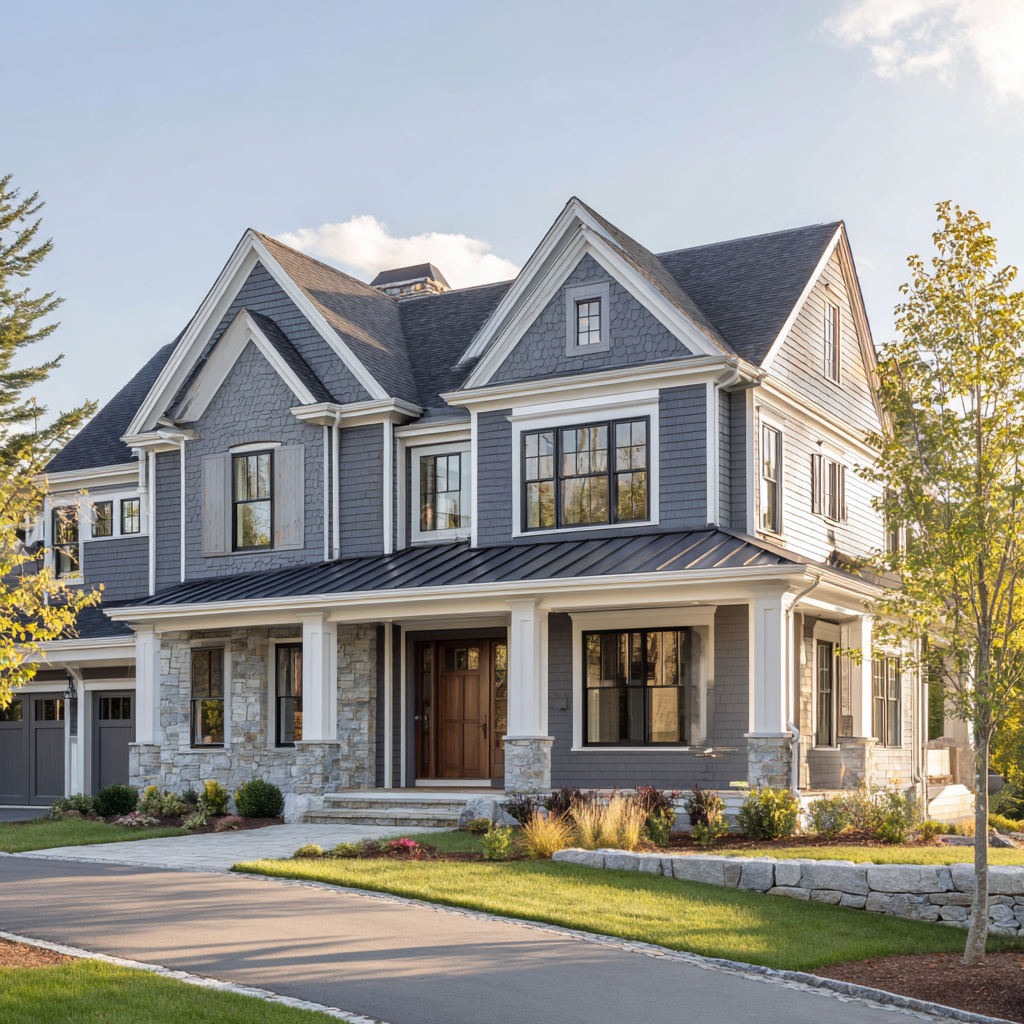
In 2026, New England new builds, you’ll want all-electric comfort with cold-climate variable-speed heat pumps, a heat-pump water heater, and induction cooking for cleaner indoor air. You’ll prioritize a high-R, airtight envelope verified by blower-door and infrared scans, plus triple-pane low‑E windows to stabilize temps and reduce HVAC loads. You’ll also plan resilience with drainage, sump monitoring, and battery/generator backup, and add balanced ERV/HRV ventilation, MERV 13 filtration, and low-VOC finishes—keep going to see how it all fits together.
All-Electric New England New Construction (Heat Pumps + Induction)
Why are so many New England new builds going all-electric in 2026? You gain tighter control over comfort, operating costs, and carbon without sacrificing performance. You’ll spec cold-climate variable-speed heat pumps for heating and cooling, pair them with a heat-pump water heater, and size the system with room-by-room loads to avoid short-cycling. You’ll choose induction cooking for faster response, better indoor air quality, and simpler ventilation design than gas. You’ll also coordinate electrical service, panel capacity, and circuiting early so EV charging, battery storage, and rooftop PV stay plug-and-play. Even as you plan insulation strategies and window innovations, you’ll treat them as inputs to equipment selection, not a separate scope, enabling a clean, future-ready MEP package.
High-Performance Envelopes: Air Sealing, R-Values, Windows
If you want your all-electric system to perform in a New England winter, you’ll start with an airtight envelope—continuous air sealing at rim joists, top plates, and penetrations, verified with blower-door testing. You’ll specify higher-R-value assemblies with continuous exterior insulation, minimized thermal bridging, and proper vapor control so the wall and roof dry out safely. You’ll also upgrade to triple-pane, low‑E windows with insulated frames and warm-edge spacers to cut heat loss, reduce drafts, and improve comfort at the glass.
Airtightness And Air Sealing
In 2026, New England builds, airtightness sits at the center of a high-performance envelope because you can’t hit your target R-values—or get the full benefit of triple-pane windows—when uncontrolled air leakage short-circuits the insulation layer. You’ll avoid airtightness misconceptions by treating the air barrier as a continuous system, not a product: sheathing membranes, tapes, gaskets, and liquid flashings must connect across rim joists, penetrations, and window bucks. You should specify mockups and sequencing so trades don’t puncture critical layers, then verify with blower-door testing at rough-in and at completion. You’ll also manage sealing failure risks by choosing compatible materials, controlling substrate moisture and temperature during adhesion, and documenting details for future service work. Done right, you get stable indoor temps, quieter rooms, and predictable HVAC loads.
Higher R-Value Assemblies
How far can you push comfort and energy stability in a New England winter without overbuilding? You do it by targeting higher R-value assemblies that match your load profile and moisture risk. Specify continuous exterior insulation to cut thermal bridging at studs, rim joists, and floor edges, then tune cavity R for cost-effective gains. Use smart vapor retarders where needed, and verify drying potential with hygrothermal modeling, not rules of thumb. At the foundation, pair insulated slabs or walls with robust crawlspace barriers and sealed transitions to the air-control layer. Your site plan matters too: integrate stormwater design so bulk water stays out of assemblies, keeping insulation dry and performance predictable. Finally, commission with blower-door and infrared scans to confirm continuity everywhere.
Triple-Pane Window Upgrades
Once you’ve reduced heat loss through walls and foundations with higher R-value assemblies, windows become the next major driver of comfort and peak heating load in a New England winter. Triple-pane upgrades cut U-factors, tame drafts, and stabilize mean radiant temperature near glass, so you feel warm at lower thermostat settings—key triple pane benefits.
Specify climate-specific glazing by orientation: higher SHGC on south for passive gain, lower SHGC east/west for summer control, and balanced SHGC north for daylight without penalty. Pair the glass with an airtight installation and thermally broken frames to protect the whole assembly.
- Lower U-factor to reduce design heating load
- Better sound attenuation for dense neighborhoods
- Reduced condensation risk at interior edges
- Higher comfort at seating zones near windows
- Improved durability with warm-edge spacers
Resilience Features Worth It in New England (Backup + Drainage)
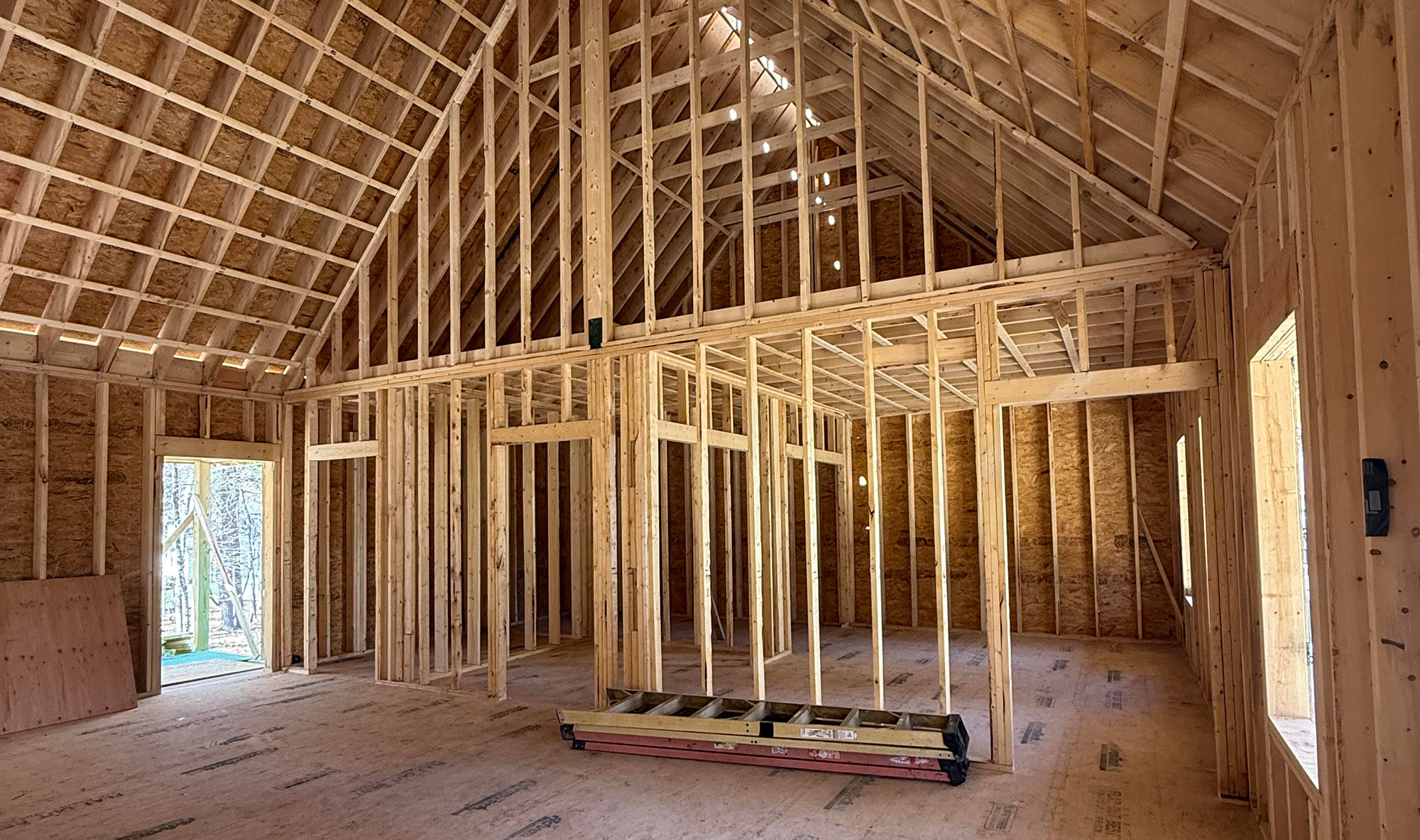
In New England, you can’t treat outages and groundwater as rare events, so you’ll want resilience upgrades that keep critical loads online and direct water away from the foundation. Whole-home backup power (generator or battery), flood-resistant drainage design (graded site, footing drains, tight foundation penetrations), and properly sized sump pumps with high-water alarms work together to limit downtime and prevent basement damage. You’ll spec these as an integrated system so capacity, run-time, discharge routing, and monitoring match your home’s risk profile and the local water table.
Whole-Home Backup Power
When nor’easters and ice storms knock out the grid, whole-home backup power keeps your critical loads online—well pump, boiler controls, sump pump, refrigeration, and basic lighting—without manual intervention. You’ll size the system based on a risk assessment of outage frequency, fuel access, and your HVAC/control topology, then validate the placement against zoning constraints, setbacks, and noise limits. Pair an automatic transfer switch with load-shedding to start large motors without oversizing, and add surge protection for sensitive inverters and smart panels.
- Right-size kW and starting amps
- Specify ATS type and service rating
- Enable circuit-level prioritization
- Plan fuel storage and refueling logistics
- Integrate monitoring, alerts, and test cycles
Flood-Resistant Drainage Design
Water has a way of finding the weakest path, so flood-resistant drainage design starts by controlling where runoff goes before it reaches your foundation. You’ll specify finish grades that fall 5% away from walls, extend roof runoff with buried tightline leaders, and separate footing drains from surface systems to prevent overload during cloudbursts.
A high-performance drainage strategy pairs free-draining backfill with geotextile-wrapped stone, then routes water to daylight, a dry well sized for New England design storms, or an engineered rain garden that infiltrates without saturating the subgrade. You’ll also detail capillary breaks under slabs, waterproofed foundation walls, and protected window wells with positive drains. When you coordinate these layers early, you reduce hydrostatic pressure, lower frost-heave risk, and keep basements usable in extreme rain events.
Sump Pumps And Alarms
How do you keep a basement dry when a nor’easter knocks out power, and your perimeter drains hit peak flow? You spec sump pumps with layered redundancy, then add alarms that tell you what’s happening before water rises. In 2026 builds, you’ll want smart control, high head capacity, and corrosion-resistant components sized to your drain tile and storm surge risk. Pair primary AC pumps with backup power to keep the system online during outages and brownouts.
- Dual-pump basins (primary + secondary) with independent floats
- Battery or generator backup power sized for runtime and inrush
- Wi‑Fi/text alarms for high water, pump failure, and power loss
- Check valves plus anti-airlock bleed to prevent short-cycling
- Service access, union fittings, and annual test protocol in your closeout
Hybrid-Work Floor Plans (Office Nooks, Flex Rooms, Acoustics)
Why squeeze a laptop onto the kitchen island if your 2026 new build can handle hybrid work by design? You’ll get dedicated office nooks near daylight and data runs, with 20-amp circuits, USB-C outlets, and concealed conduit for clean upgrades. Place a pocket door or glass slider to control sightlines without killing light.
For deeper focus, you’ll want a flex room sized for a sit-stand desk plus a two-person call zone. Specify acoustic zoning: staggered-stud walls, mineral-wool batts, solid-core doors, and resilient channel at key partitions. Add ducted returns with lined boots, plus low-sone ventilation so your mic stays clean. Build in a shallow equipment closet for router, NAS, and UPS, and you’ll stay reliable, quiet, and ready.
Durable New England Exteriors (Salt Air, Snow, Ice Dams)
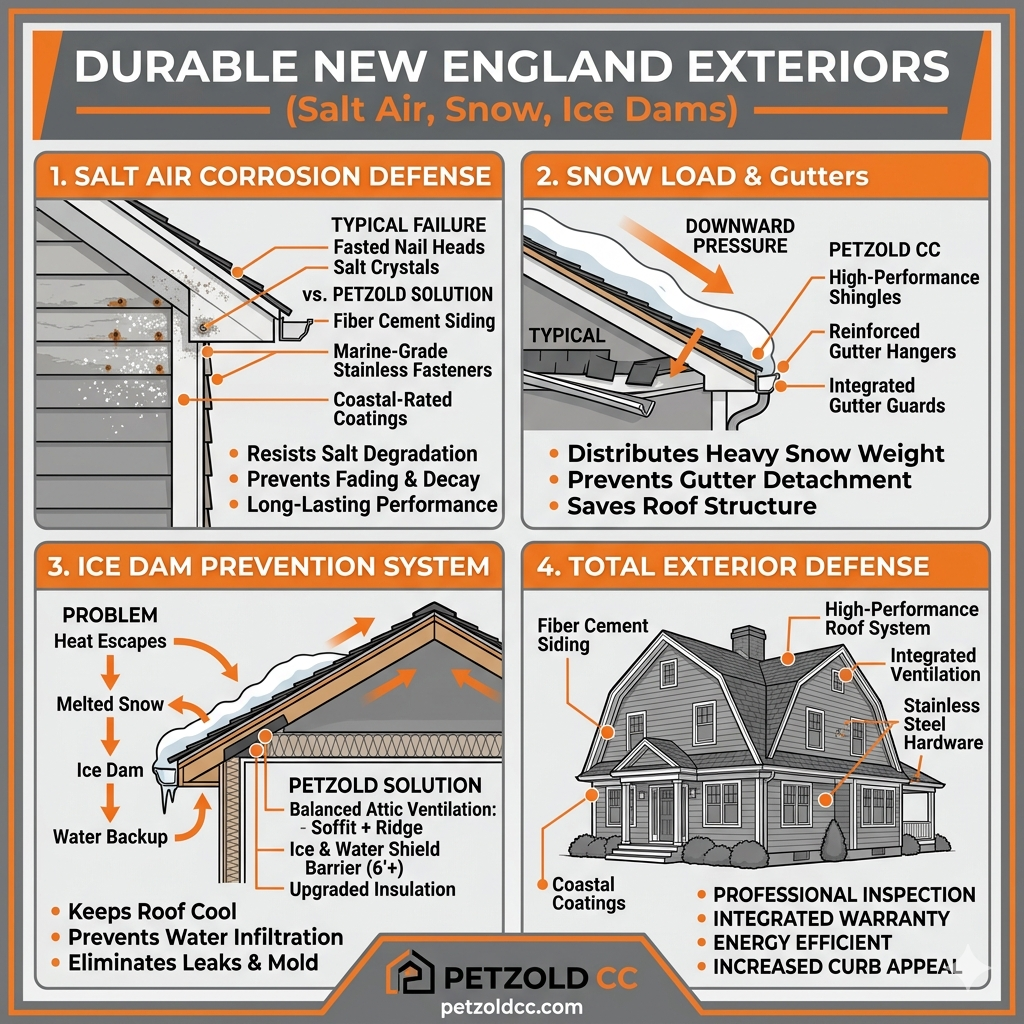
In New England, exterior durability begins at the weather line, so you’ll specify assemblies that shrug off salt spray, freeze-thaw cycling, and wind-driven snow before you pick colors. You’ll select durable exteriors that manage water, air, and thermal continuity while resisting coastal corrosion and mountain drift.
- Specify salt-resistant materials: stainless/HDG fasteners, fiber-cement, PVC trim, coated metals
- Use a ventilated rainscreen with high-perm WRB and taped sheathing transitions
- Engineer roof geometry and connections for robust snow loads and drifting zones
- Detail eaves, valleys, and penetrations with peel-and-stick membranes for ice dam prevention
- Elevate cladding bases, flash openings, and add kick-out flashing at roof-to-wall joints
You’ll validate choices with climate-specific testing data and long-warranty product systems.
Healthier Interiors (ERV/HRV, Low-VOC Finishes, Humidity Control)
Where comfort and health intersect in 2026 New England builds, you’ll treat indoor air as a designed system—not a byproduct of a tight envelope. You’ll specify an ERV or HRV sized to your ACH target, then commission it for balanced supply/return, and low SFP, so it runs continuously without an energy penalty. Pair it with MERV 13 filtration at the air handler, and you’ll cut particulates and allergens while keeping fresh air predictable. You’ll choose low-VOC primers, sealants, and flooring finishes to reduce off-gassing during the first year. For humidity control, you’ll target 35–50% RH using smart dehumidification, bath exhaust timers, and a capillary break at the slab to manage interior moisture. That strategy supports discoloration control, limits mold risk, and protects woodwork and paint.
Frequently Asked Questions
How Long Does the Typical New England New-Build Permitting Process Take in 2026?
In 2026, you typically spend 3–6 months on a straightforward New England new-build permit, but you should plan 6–12+ months if reviews stack up. You’ll face permitting delays from conservation commissions, stormwater, and utility sign-offs. If your design triggers zoning variances, add 2–4+ months for hearings, abutter notice, and appeals. You can compress timelines with digital submissions, coordinated stamped sets, and pre-application meetings.
What Are Average Construction Timelines for a Custom Home Versus a Spec Build?
You’ll typically see a custom home construction timeline of 12–20 months, while a spec build runs 6–12 months from groundbreaking to CO. You’ll extend custom schedules with design iterations, long-lead systems (heat pumps, advanced envelopes), and bespoke inspections. You’ll compress spec schedules with standardized plans and pre-negotiated subs. You’ll still face zoning challenges—setbacks, wetlands, historic districts—that can add 1–4+ months before mobilization and kickoff.
Which Design Choices Improve Resale Value Most in New England Neighborhoods?
Choose timeless exteriors, flexible interiors, and high-efficiency systems—you’ll boost resale value most in New England neighborhoods. Picture a crisp clapboard façade, black-framed windows, and a standing-seam roof catching winter light. Inside, you’ll win resale appeal with open-but-zoned plans, a first-floor office/guest suite, and generous mudroom storage. You’ll protect home equity by specifying heat pumps, tight envelopes, high-R insulation, and durable composite decking. Add EV-ready wiring, too.
How Much Should Homeowners Budget for Landscaping, Driveways, and Hardscaping?
You should budget 5%–10% of your home’s build cost for landscaping, driveways, and hardscaping, with 1%–3% reserved annually for upkeep. For typical landscaping budgets, plan $15–$35/sq ft for patios/walks, $8–$18/sq ft for pavers, and $6–$12/sq ft for asphalt; heated surfaces add $20–$40/sq ft. Prioritize drainage, edge restraint, and lighting for hardscaping ROI.
What Warranties Should Builders Provide for Structural, Systems, and Workmanship Issues?
You should demand a written warranty bundle: 10-year structural, 2-year systems (HVAC, plumbing, electrical), and 1-year workmanship/finishes, all with clear warranty coverage terms. But here’s the part you can’t skip—define defect remedies: repair vs. replace, timelines, and who pays for diagnostics. Require transferability, exclusions in plain language, and escalation steps (service portal, arbitration). You’ll protect performance and keep your build aligned with next-gen expectations.
Conclusion
In 2026, you’re building smarter New England homes by pairing all-electric systems with tight, insulated envelopes and resilience upgrades that actually pencil out. You’ll spec cold-climate heat pumps, induction, and ERV/HRV ventilation, then lock in performance with meticulous air sealing, high-R assemblies, and better glazing. You’ll also plan for hybrid work and harsher weather with durable cladding and drainage. Notably, DOE estimates that you can cut heating/cooling energy use by up to ~30% with strong air sealing and insulation.
Frequently Asked Questions
Here are 10 highly strategic, SEO-optimized FAQs tailored to modern high-performance design, regional New England architecture, and building trends. These are structured in an authoritative, peer-to-peer tone to perfectly address what luxury homeowners look for when building a new custom home.
1. What is a “high-performance home,” and why is it trending in New England?
A high-performance home is engineered to optimize energy efficiency, indoor air quality, and structural durability. Given our region’s biting winters and humid summers, standard minimum-code building techniques are no longer cutting it. Homeowners are demanding advanced building systems—like continuous exterior insulation, hyper-insulated framing, and airtight air-sealing packages—to dramatically lower utility bills, eliminate drafty cold spots, and permanently prevent ice dams.
2. How do modern custom homes achieve net-zero or net-zero-ready status?
“Net-zero ready” means a home is built so efficiently that a modestly sized solar panel array can offset 100% of its annual energy consumption. Custom builders achieve this by:
- Engineering a continuous, airtight building envelope to stop thermal bridging (heat loss through wood studs).
- Specifying high-performance triple-pane windows.
- Installing highly efficient, all-electric mechanical systems like air-source heat pumps and hybrid heat pump water heaters.
3. Why are all-electric HVAC systems and heat pumps replacing traditional fossil fuels?
Modern cold-climate heat pumps have undergone massive technological evolution. Unlike older models that struggled when the temperature dropped below freezing, today’s variable-speed inverter systems can pull ambient heat out of sub-zero New England air down to -15°F or colder. Homeowners want to eliminate dirty oil tanks and volatile propane costs by shifting to clean, hyper-efficient, zone-controlled electric heating and cooling.
4. What is an ERV or HRV, and why is mechanical ventilation required in new builds?
Because modern custom homes are built to be incredibly airtight, they can no longer rely on random structural drafts to fresh air the space. To prevent the indoor air from becoming stagnant or humid, building codes require mechanical ventilation.
-
HRV (Heat Recovery Ventilator) & ERV (Energy Recovery Ventilator): These systems continuously exhaust stale indoor air from bathrooms and kitchens while pulling fresh outdoor air into living spaces. As the two air streams pass each other, the system captures up to 85% of the temperature from the outgoing air and transfers it to the fresh incoming air, maintaining perfect indoor air quality without wasting energy.
5. How do builders balance ultra-modern efficiency with classic New England architectural character?
No one wants a luxury home that looks like a sterile spacesuit dropped in the middle of a historic neighborhood. Modern custom carpentry bridges this gap using “convergent design.” Builders utilize modern, maintenance-free materials like composite siding (James Hardie or Boral) and PVC trim boards that mimic the shadow lines of classic clapboard and historic moldings, but will never rot, warp, or require painting. Inside, custom timbers, exposed beams, and wide-plank wood flooring inject immediate historic warmth into highly engineered spaces.
6. What is a “flexible floor plan,” and why has it become a must-have for new construction?
The days of rigid, closed-off formal dining rooms and single-purpose spaces are largely gone. Homeowners want open layouts that can adapt as their lifestyle changes over a decade. This looks like designing a main-floor office with hidden closet storage and an adjacent full bath, so it can transition into a first-floor primary suite or in-law apartment down the line, ensuring long-term aging-in-place viability.
7. What are the benefits of installing a main-floor primary suite?
Main-floor primary suites are skyrocketing in popularity due to generational foresight and everyday convenience. It completely eliminates the need to climb stairs as you age, making the home a lifetime asset. Additionally, separating the primary suite on the first floor while keeping secondary bedrooms on the upper level creates a highly desired structural buffer for privacy for families with teenagers, frequent houseguests, or live-in relatives.
8. How does a custom mudroom or “drop zone” add value to a new home build?
In New England, a mudroom isn’t a luxury accessory—it’s a front-line defense system against the elements. Modern trends treat the mudroom as a dedicated buffer zone between the garage and the main living space. Homeowners want deep, custom cabinetry lockers, integrated charging stations for devices, durable tile floors with radiant under-floor heating to dry out wet boots, and immediate, seamless access to a dedicated laundry room or walk-in pantry.
9. What is smart-home integration, and what structural wiring should be done during framing?
True smart-home integration is built directly into the home’s bones, not plugged into a wall outlet later. During the “rough-in” framing phase, a custom builder runs dedicated Cat6 Ethernet lines and low-voltage control wires to central hubs. This layout ensures lightning-fast hardwired connections for whole-home Wi-Fi mesh nodes, automated smart-lighting panels, security systems, smart thermostats, and motorized window shades without relying entirely on crowded wireless bands.
10. Why is building code insulation changing, and how does it impact a new construction budget?
State and local building codes across New England (including the International Energy Conservation Code upgrades) are continuously tightening insulation and blower-door air-tightness requirements. While meeting these strict codes carries a slightly higher upfront material cost—requiring specialized insulation details like spray foam, continuous exterior rigid foam sheathing, and extensive flashing tapes—the investment pays off rapidly. It slashes your monthly heating and cooling footprint, preserves the home’s framing from moisture damage, and safeguards your home’s future resale value.