Building New vs. Buying Old in the Greater Boston Area
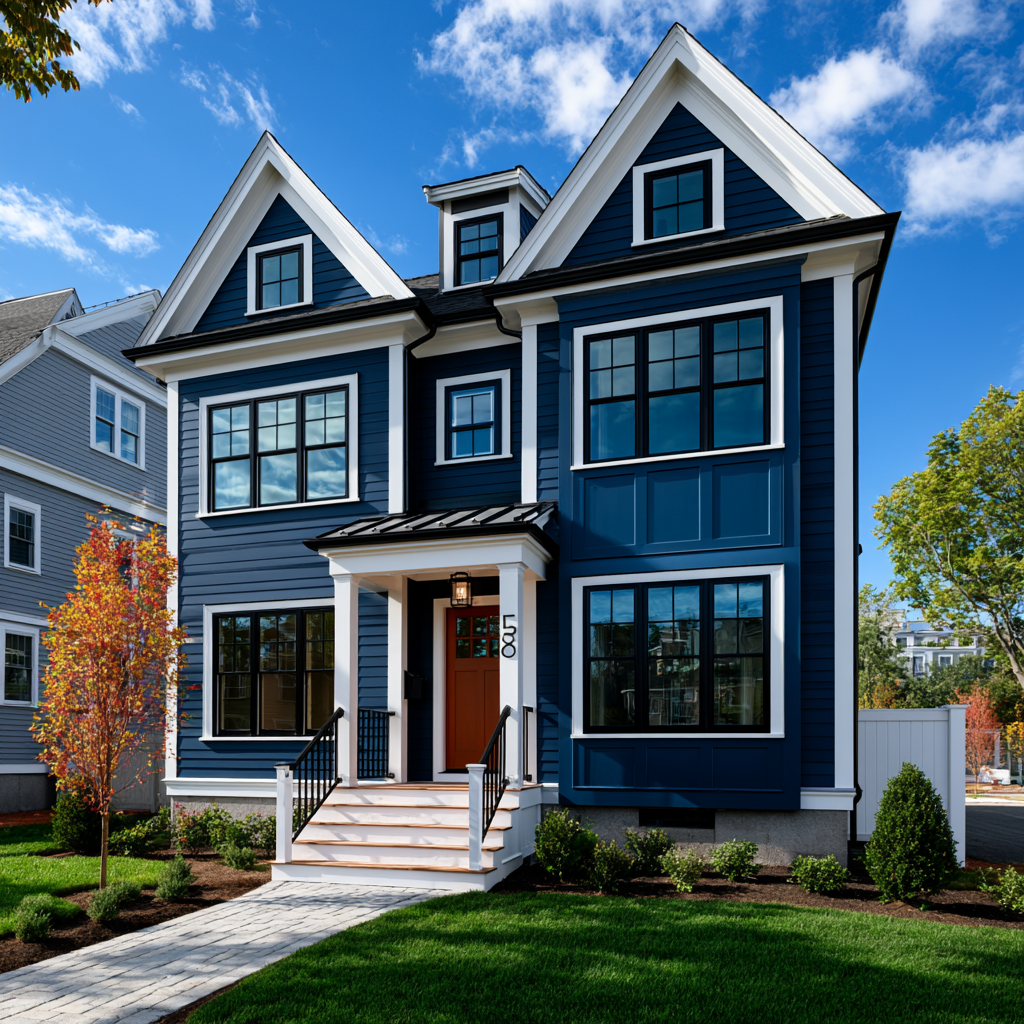
In Greater Boston, you’re choosing between new-build performance and the certainty of an old-home location. If you build, you can get an airtight, electrification-ready house with modern layouts, but you’ll face longer timelines, permitting delays, bid changes, and $450–$800+/sf costs, with land costs potentially dominating. If you buy older, you’ll likely move in faster on a mature street, yet you may need upgrades to insulation, paneling, HVAC, plumbing, or the foundation. Next, you’ll see where new construction pencils and what risks to budget for.
Should You Build New or Buy an Older Home in Boston?
Where do you start in Greater Boston—by breaking ground on a new build or by buying an older home with established character? You start by mapping your priorities: performance, predictability, and resale. Building new can deliver airtight envelopes, electrification-ready systems, and layouts that fit how you live now, but Cost vs. Time can bite when financing carries longer and bids shift. You’ll also face Zoning Challenges, permitting timelines, and neighbor scrutiny that can stall momentum. Buying older gets you a proven location, mature streetscapes, and a faster move-in, yet you’ll need to budget for upgrades like insulation, panels, and HVAC to meet modern comfort targets. In either path, you win by pricing risk up front and aligning your plan with Boston’s hyperlocal comps.
Where New Construction Is Realistic Around Greater Boston
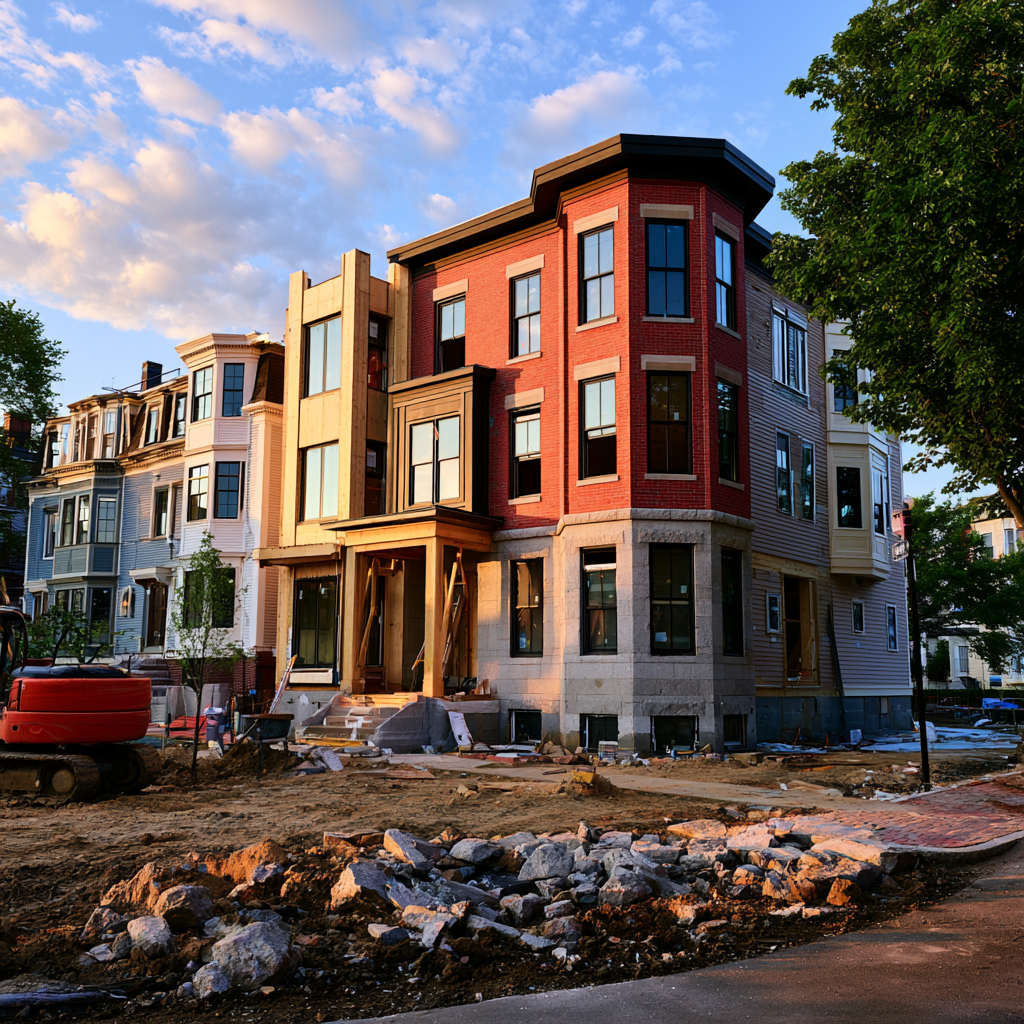
After you’ve weighed performance and predictability against renovation risk, the next question is whether a new build is even feasible on the ground in Greater Boston. You’ll find the best odds where land assembly, reuse, and policy align—and where new zoning supports smarter urban density without paralyzing entitlement timelines.
- You target inner-belt suburbs (Somerville, Medford, Quincy) where transit corridors invite multifamily or townhouse infill.
- You look at teardown pockets in Newton, Needham, and Wellesley, but only on lots that meet setbacks cleanly.
- You consider adaptive reuse in Everett, Malden, and Revere, where industrial parcels can reset the site.
- You prioritize communities with clear design review and predictable permitting.
- You map utilities, wetlands, and access before you fall in love.
What Does New Construction Cost in Greater Boston?
How much does new construction really cost in Greater Boston once you move past the per-square-foot headlines? You’ll typically budget for land, design, permits, utilities, sitework, and a builder’s margin, then layer in options such as high-performance envelopes, electrification, and smart-home systems. In close-in towns where lots are scarce, land can dominate your total, while farther out, you’ll spend more on driveways, wells, or septic systems.
Today’s realistic price ranges often land around $450–$800 per square foot for custom new construction, with premium modern builds pushing higher. A 2,800-square-foot home might pencil at roughly $1.25M–$2.25M before land, depending on complexity and finish level. To stay innovative and on-budget, you’ll want early pricing, tight scope, and procurement plans.
What Do Older Boston-Area Homes Cost to Repair and Upgrade?
New construction pricing can look straightforward next to the variable reality of renovating an older Boston-area home. In Somerville, Newton, or Quincy, you’ll often budget beyond the inspection report: you’re buying hidden conditions, tight site access, and older systems that don’t match today’s performance goals.
- Upgrade older insulation and air-seal to cut winter loads and boost comfort.
- Expect electrical and panel updates for heat pumps, EV charging, and smart controls.
- Plan for plumbing refreshes, especially galvanized lines and aging sewer connections.
- Price in foundation costs: drainage, sill repairs, and structural reinforcement.
- Add finish carpentry and window work to preserve character while modernizing.
A smart approach is to prioritize energy, water, and structure first, then layer in design upgrades that strengthen resale.
How Long Each Option Takes: and the Biggest Risks
Where does the timeline really stretch in Greater Boston—in on-site work, permits, or the surprises behind the plaster? If you build new, you’ll often spend months on design, zoning, wetlands review, and utility coordination before you ever break ground. Add supply-chain swings and inspection scheduling, and a long timeline can push move-in well past your target season. Your biggest risks: change orders, escalation clauses, and financing pitfalls if your rate lock expires mid-build.
If you buy old, you can close fast, but you’ll trade speed for uncertainty. You might uncover knob-and-tube wiring, lead, or a failed sewer line after you move in, and you’ll juggle contractors amid Boston’s tight labor market. Your best hedge is a pre-purchase scope, contingency budget, and permit-ready plans.
Frequently Asked Questions
How Do Property Taxes Compare Between New Builds and Older Homes?
You’ll usually pay higher property taxes on a new build because the assessed value reflects current materials, upgrades, and recent sale prices, whereas older homes may be assessed at lower levels until major renovations trigger reassessment. In Greater Boston, tax comparisons hinge on each town’s rate and valuation cycle, so you should verify the latest card and exemptions. You can’t count on depreciation advantages for personal residences, but certain energy incentives may help.
Are There Historic District Rules Limiting Renovations on Older Boston Homes?
Yes—historic district rules can seriously limit renovations on older Boston homes. Picture your sleek redesign hitting a brick wall of approvals so thick it could stop a Green Line train. If you’re in a landmarked area, historic zoning may dictate windows, siding, paint, and even rooflines, and you’ll need commission sign-off. Plan for longer renovation timing, tighter contractor scheduling, and higher design costs, but you’ll protect long-term curb appeal.
Can I Get Construction-To-Permanent Financing for a New Build in Massachusetts?
Yes—you can get construction-to-permanent financing for a new build in Massachusetts, but you’ll need strong plans, permits, and a qualified builder. Local banks and credit unions often offer Massachusetts financing with a single close that funds construction, then converts to a fixed or ARM mortgage. Expect draw schedules, inspections, contingency reserves, and higher down payments. You’ll also want a rate-lock strategy and timeline buffer for permitting delays.
How Do Energy Rebates and Incentives Differ for New Versus Existing Homes?
More choice, more control: new builds often stack energy-efficiency incentives with builder rebates for high-performance envelopes, heat pumps, and advanced ventilation because you lock in specs from day one. Existing homes usually qualify through retrofit programs—air sealing, insulation, electrification—after an energy assessment, so incentives depend on what you upgrade. Around Greater Boston, you’ll also see utility add-ons and Mass Save pathways; you’ll want timelines and documentation buttoned up.
What Warranties Come With New Construction Compared to Older Home Purchases?
You’ll usually get Potential warranties with new construction: a builder’s one-year workmanship, two-year systems, and up to ten-year structural Coverage terms, though trade-offs with builders can limit claims. With an older purchase, you typically rely on seller disclosures, negotiable credits, and optional third-party home warranties that exclude much. Home inspection concerns rise in legacy stock, so you’ll budget for updates. In Greater Boston, confirm the reputations of local builders and HOA rules.
Conclusion
In Greater Boston, you’re choosing between a fresh compass and a well-worn map. Build new and you’ll pay for clean lines, tighter energy bills, and fewer surprises—if you can secure a buildable lot and ride out permitting. Buy old and you’ll buy location, character, and quicker keys, but you’ll budget for roofs, wiring, and hidden rot. Either way, your best move is a realistic timeline, a hard-nosed budget, and local pros.