Bathroom Remodel ROI: Which Upgrades Add the Most Value in New Hampshire
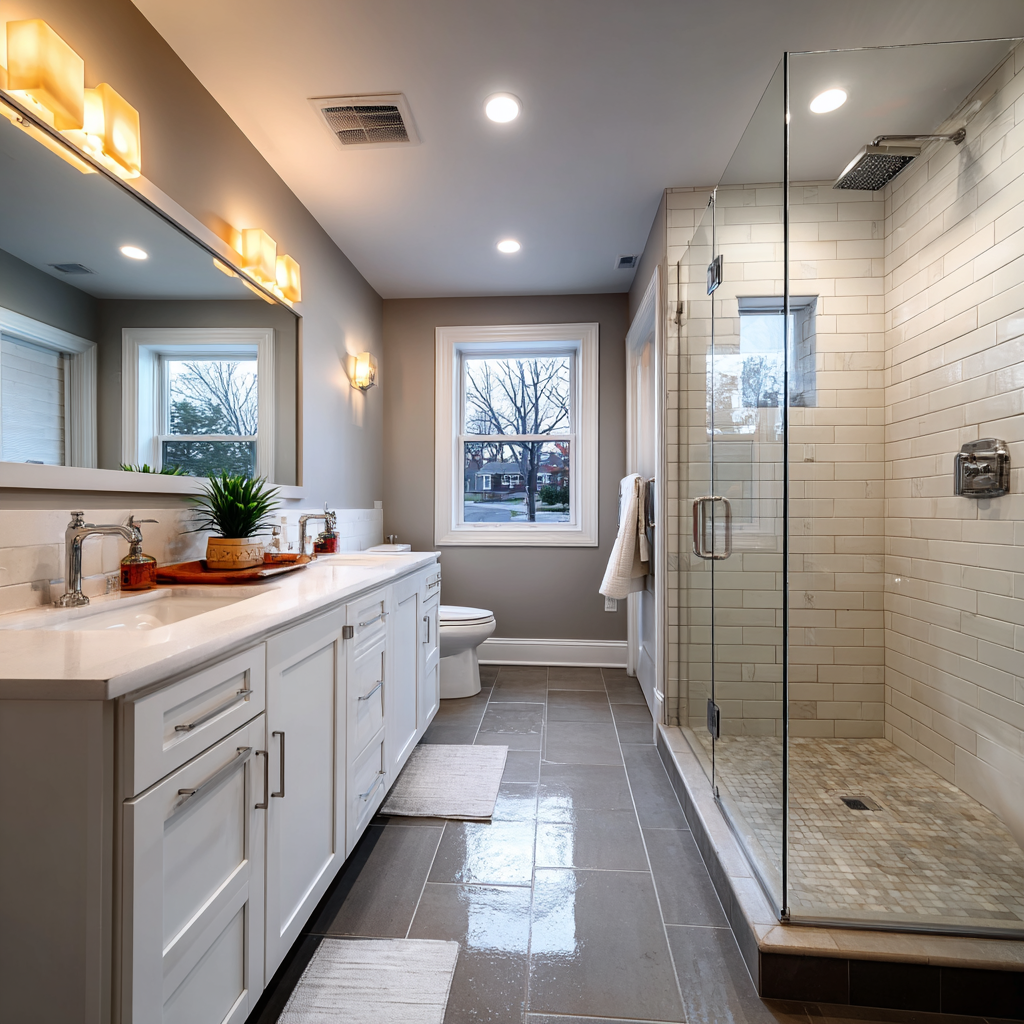
In New Hampshire, you’ll usually get the best bathroom remodel ROI from upgrades that improve function first: lighting, ventilation, storage, fixtures, and durable finishes. Buyers notice a clean, bright, low-maintenance room before luxury details, so neutral tile, modern vanities, tight grout lines, and water-saving fixtures tend to boost confidence and value. Skip flashy extras that don’t cut upkeep. If you keep going, you’ll see which changes tend to pay back most.
How Bathroom Remodel ROI Works in New Hampshire
Understanding bathroom remodel ROI in New Hampshire starts with comparing your spending to the value buyers are likely to recognize in your local market. You should measure each project by its cost-benefit, not just its aesthetic lift, because buyers in Concord, Nashua, and Portsmouth weigh finishes against overall home price. In this market, efficient layouts, durable materials, and energy-efficient fixtures usually deliver greater ROI than luxury overbuilding. You’ll also want to verify zoning regulations and permit requirements before you start, since compliance protects resale value and prevents costly delays. When you track material, labor, and approval costs against projected appraisal gains, you get a clearer investment signal. That data helps you prioritize upgrades that align with demand and deliver measurable returns.
Which Bathroom Upgrades Add the Most Value?
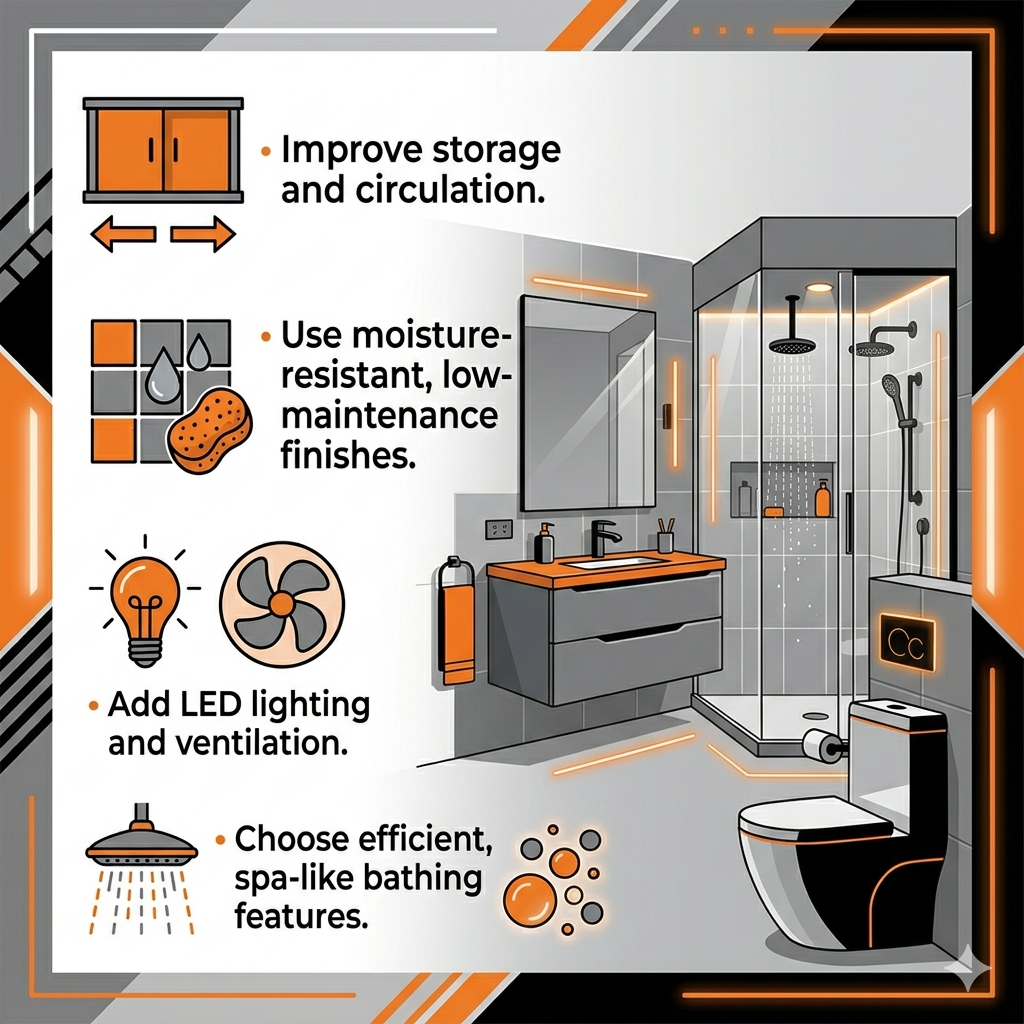
The upgrades that add the most value are the ones buyers notice immediately and use every day: a clean, efficient layout; a modern vanity with durable countertops; water-saving toilets and fixtures; and a well-lit shower or tub area. In New Hampshire, you’ll usually see the strongest return when you match recent trends with practical performance and local personal preferences.
- Improve storage and circulation.
- Use moisture-resistant, low-maintenance finishes.
- Add LED lighting and ventilation.
- Choose efficient, spa-like bathing features.
These changes help your bathroom feel current, reduce future upkeep, and support resale by signaling quality. Focus on upgrades that solve daily pain points, because buyers tend to pay more for spaces that look fresh, function better, and feel move-in ready.
Which Fixtures and Vanities Pay Off?
A well-chosen vanity and fixture package can deliver outsized payback because buyers notice them right away and use them every day. You should prioritize durable, water-efficient faucets, a streamlined mirror, and a vanity with smart storage. In New Hampshire, buyers respond to clean lines, mixed-metal finishes, and floating designs that make small baths feel larger. Track fixtures costs closely, because premium looks don’t always require premium pricing; midrange hardware often beats luxury pieces on ROI. Current vanity trends favor quartz tops, integrated sinks, and drawer organizers that signal modern utility. If you upgrade lighting and coordinate finishes, you create a cohesive, innovative impression that reads as move-in ready. Focus on quality touchpoints, not flash, and you’ll maximize resale value.
Tile and Flooring Upgrades That Boost Value
Tile and flooring choices can shift buyer perception fast, especially in a bathroom where condition and cleanliness are easy to judge. You can maximize resale by choosing materials that signal durability, low maintenance, and current tile trends. In New Hampshire, buyers often reward surfaces that look modern without feeling risky.
- Use large-format porcelain to reduce grout lines and create a cleaner visual field.
- Pick neutral stone-look tiles; they align with broad demand and resist style fatigue.
- Upgrade to slip-resistant flooring, which adds practical value in a wet space.
- Prioritize grout longevity with sealed, stain-resistant products that cut future upkeep.
When you compare options, focus on install quality and long-term wear. That’s where your ROI usually improves most.
Energy-Saving Bathroom Features Buyers Want
You can boost bathroom ROI by focusing on energy-saving upgrades buyers can measure, such as low-flow fixtures, LED vanity lighting, and efficient ventilation. These features reduce utility costs, improve indoor air quality, and signal a well-planned remodel. In New Hampshire, that combination can make your bathroom more competitive and more valuable at resale.
Low-Flow Fixtures
Low-flow fixtures can deliver one of the clearest ROI boosts in a bathroom remodel because buyers increasingly look for lower utility costs and smarter water use. When you choose low-flow models, you make fixture upgrades that signal efficiency without sacrificing performance.
- You reduce gallons per flush and per minute, which can trim monthly water bills.
- You appeal to buyers who compare operating costs, not just finishes.
- You support New Hampshire homes where conservation-minded updates stand out.
- You position the bath as modern, practical, and future-ready.
You don’t need flashy tech to make the room feel innovative. You need measurable savings, reliable performance, and a clean installation. That combination helps your remodel feel smarter and can strengthen your resale story.
LED Vanity Lighting
LED vanity lighting can boost a bathroom remodel’s ROI by reducing energy use while improving how the space looks and functions. You lower operating costs because LEDs use far less electricity than older bulbs and last much longer, reducing replacement expenses over time. A well-placed LED vanity sharpens facial lighting, which buyers notice during showings because it makes the room feel brighter, cleaner, and more modern. Wireless dimming adds control, letting you tailor output for grooming, relaxing, or late-night use without sacrificing efficiency. In New Hampshire homes, that flexibility signals smart, future-ready design. If you want an upgrade that feels innovative and supports resale value, choose fixtures with high color accuracy, slim profiles, and efficient controls that deliver measurable appeal.
Efficient Ventilation
Efficient ventilation can improve the ROI of a bathroom remodel by controlling moisture, reducing energy waste, and reducing the risk of costly repairs. You’ll also support better humidity control, which buyers in New Hampshire value in tight, insulated homes. Efficient ventilation helps you protect finishes, cut mold concerns, and signal smart, modern design.
- Choose an ENERGY STAR-rated fan for lower operating costs.
- Size the fan correctly to match room volume and steam load.
- Add a humidity-sensing switch for automatic, efficient ventilation.
- Vent air outdoors, not into the attic, to avoid hidden damage.
You’ll see stronger resale appeal when your bathroom feels drier, cleaner, and more advanced. That’s a practical upgrade buyers can measure.
Layout Changes That Improve Home Value
What layout changes deliver the strongest return in a New Hampshire bathroom remodel? You’ll usually see the best ROI when you reconfigure to improve circulation, enhance sightlines, and streamline the fixture sequence. Smart layout considerations often start with widening the entry, shifting the vanity to improve usability, and creating a more open shower zone that feels current. If you can preserve plumbing accessibility, you’ll reduce labor costs while still making high-impact moves that buyers notice. A well-planned layout can also separate wet and dry areas, which boosts perceived space and daily function. That matters because modern buyers value rooms that feel larger, cleaner, and easier to navigate. When you optimize flow, you’re not just renovating—you’re increasing market appeal and supporting stronger resale value.
Bathroom Upgrades That Rarely Pay Off
Not every bathroom upgrade boosts resale value, even when the layout is well planned. You can overspend on features that narrow your buyer pool and weaken ROI. In New Hampshire, value matters most when upgrades align with broad demand rather than personal taste.
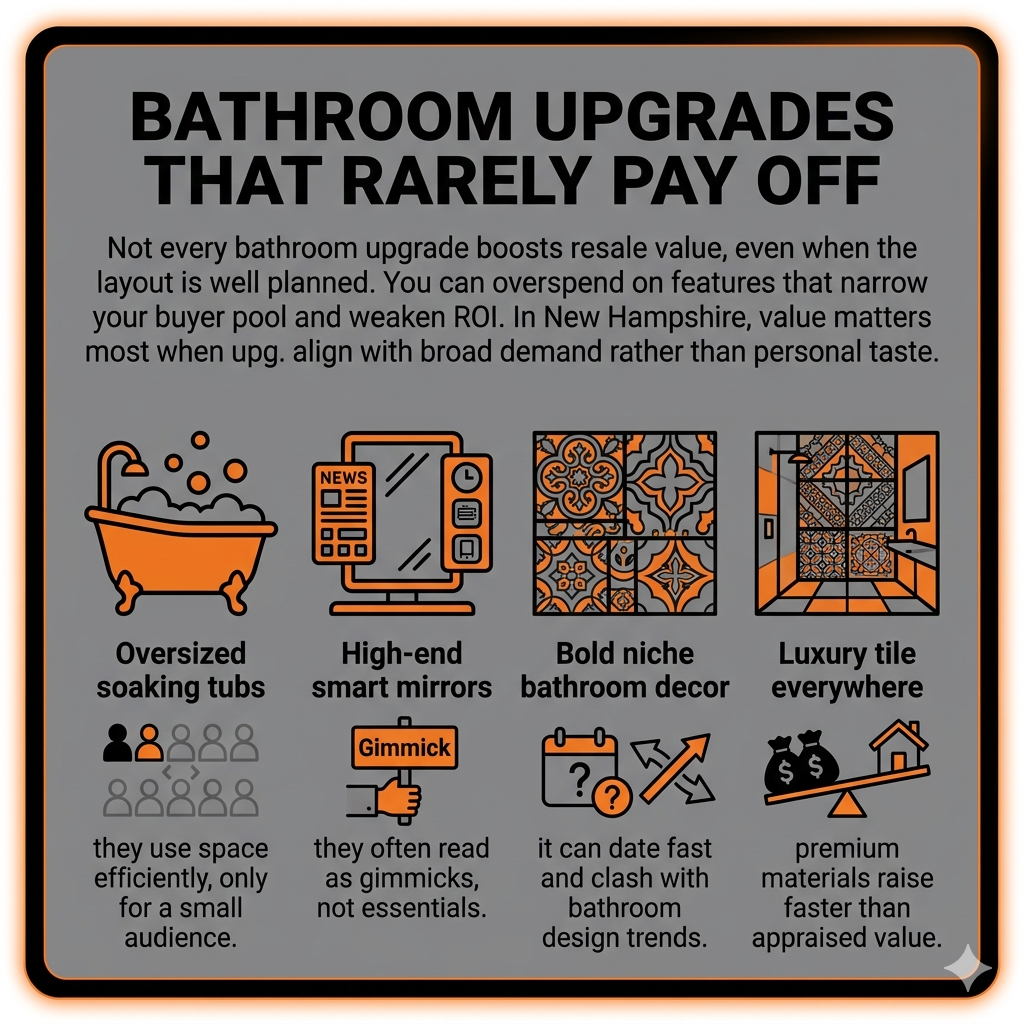
- Oversized soaking tubs: they use space efficiently, only for a small audience.
- High-end smart mirrors: they often read as gimmicks, not essentials.
- Bold niche bathroom decor: it can date fast and clash with bathroom design trends.
- Luxury tile everywhere: premium materials raise cost faster than appraised value.
You’ll usually get better returns from durable finishes, efficient fixtures, and clean lines. Think innovation, but keep it market-tested. The data show buyers pay for function first, then style.
What New Hampshire Buyers Notice First
In New Hampshire, buyers usually notice the bathroom’s condition before they notice its extras: a clean layout, working fixtures, good lighting, and finishes that look easy to maintain. You’ll see the same pattern in market data: visible quality signals lower perceived risk and raises offer confidence. Neutral tile, tight grout lines, and modern vanities read as low-maintenance assets rather than personal taste. Buyers also register bathroom scent fast; a fresh, dry space suggests sound ventilation and fewer hidden issues. Even small upgrades can strengthen value when they feel purposeful. Towel warmers, for example, signal comfort and efficiency, but they work best once the basics are in place. If the room looks hygienic, bright, and current, you’ll create a stronger first impression that supports ROI.
How to Plan a High-ROI Bathroom Remodel
To plan a high-ROI bathroom remodel, start by ranking upgrades by their likely payback, not by their wow factor. You’ll get the best results when you optimize for buyer demand, durability, and cost control.
- Set a target budget tied to comparable New Hampshire home values.
- Prioritize fixtures, lighting, and ventilation before decorative extras.
- Choose bathroom color schemes that feel current, neutral, and easy to resell.
- Add smart storage solutions that improve function without expanding the footprint.
Track each decision against its estimated resale lift. If a feature won’t reduce maintenance or improve daily use, skip it. You’ll maximize ROI by blending efficient materials, clean design, and modern convenience. That approach creates a bathroom that looks innovative, performs well, and appeals to the widest pool of buyers.
Frequently Asked Questions
How Long Does a Bathroom Remodel Usually Take in New Hampshire?
You’ll usually need 2 to 6 weeks for a bathroom remodel in New Hampshire, depending on scope, crew size, and material availability. Your bathroom timing can stretch if you change plumbing, move walls, or wait on fixtures. A permit impact can add several days to a few weeks, especially for electrical or structural work. If you plan smartly and order early, you’ll protect value and keep your project on schedule.
Do Permits Affect the Resale Value of a Bathroom Remodel?
Yes—permits can increase your bathroom remodel’s resale value by reducing risk and verifying code compliance. You’ll usually see a stronger permitting impact on buyers when the work includes plumbing, electrical, or layout changes. Permitted projects also make appraisals smoother and support higher resale value by documenting quality. If you skip permits, you may save upfront, but you often lower buyer confidence and future marketability.
Should I Remodel Before Listing My New Hampshire Home?
Yes—you should remodel before listing only if the numbers work, and the payoff can surprise you. You’ll want to test Remodel timing against expected sale speed, because a targeted update can boost buyer interest and shorten days on market. Focus on Contractor selection first, then compare project cost to the likely price lift. If your home’s dated bath scares buyers, a smart refresh often outperforms a full luxury overhaul.
How Much Should I Budget for a Midrange Bathroom Update?
You should budget about $15,000 to $30,000 for a midrange bathroom update, depending on size, labor, and finishes. Your budget impact will shift most with tile, vanity, plumbing fixtures, and lighting. Midrange costs usually deliver the best value when you upgrade function first and choose durable, modern materials. If you want innovation, prioritize water-saving fixtures and smart lighting that boost appeal without pushing costs into luxury territory.
Can Small Bathrooms Still Deliver Strong ROI?
Absolutely—small bathrooms can still deliver strong ROI, and you don’t need a palace to see pleasing returns. You’ll often get better value from smart, compact upgrades than from oversized renovations. In many ROI questions, small bathrooms perform well because you can refresh fixtures, lighting, and storage without overspending. You’re optimizing square footage, not chasing grandeur, so your investment stays efficient, innovative, and market-friendly.
Conclusion
When you plan your bathroom remodel in New Hampshire, you can protect your investment by choosing upgrades that buyers quietly reward: efficient fixtures, durable tile, fresh vanities, and better lighting. You’ll usually get the best return from improvements that feel updated without looking overdone. Skip pricey luxury features that may not repay themselves. Instead, focus on changes that make the space cleaner, brighter, and easier to use, and you’ll position your home for stronger resale value.