How Custom Craftsmanship Makes the Difference in New Construction in New Hampshire
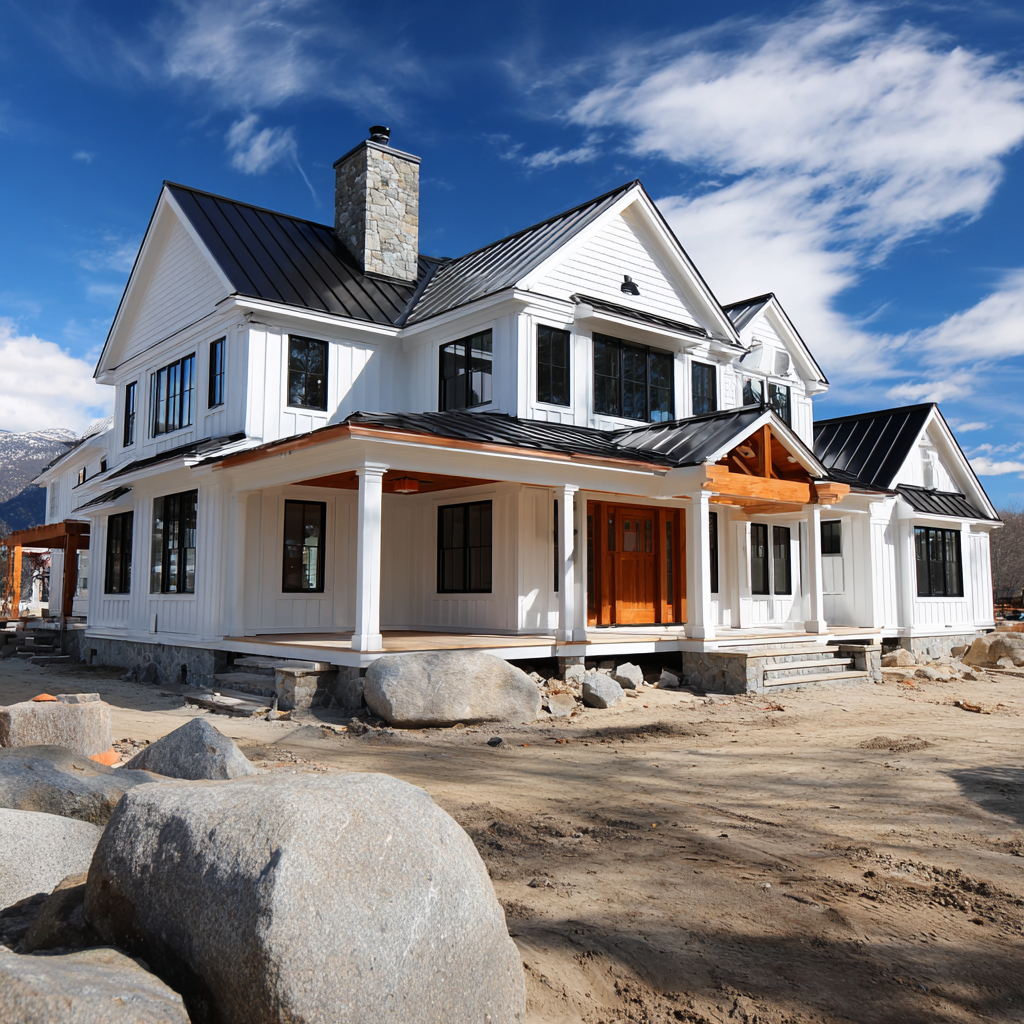
Custom craftsmanship makes a clear difference in New Hampshire new construction because you get a home designed for your site, climate, and daily routines. You’ll benefit from better snow-shedding roofs, durable exterior materials, tighter insulation, and layouts that improve circulation and storage. That precision also supports energy efficiency, lower maintenance, and stronger resale value. When the details are built to fit your life and local conditions, the advantages keep adding up in ways worth exploring further.
Why Custom Homes Matter in New Hampshire
Why do custom homes matter in New Hampshire? You gain a residence engineered around your site, your workflow, and your long-term performance goals. In a state with varied terrain, dense forests, and distinct municipal codes, you can’t rely on generic layouts to deliver efficiency or resilience. Custom design lets you integrate custom sustainability measures, optimize daylight, and reduce operational waste without sacrificing comfort. You also preserve regional aesthetics by aligning massing, proportions, and exterior expression with local context rather than forcing a template onto the landscape. This approach gives you control over spatial logic, smart-home integration, and future adaptability. If you want innovation, custom construction lets you specify a home that performs as precisely as it looks, while meeting your practical and architectural priorities.
Best Materials for New England Weather
In New Hampshire’s freeze-thaw climate, you need materials that resist moisture intrusion, thermal movement, and long-term decay. You should specify engineered solutions that maintain dimensional stability and protect your envelope. Prioritize:
- Fiber-cement cladding for low absorption and superior impact resistance.
- Standing-seam metal roofing for rapid snow shedding and durable seams.
- Closed-cell spray foam for seasonal insulation and airtight performance.
- PVC or composite trim for rot resistance at vulnerable edges.
These assemblies improve energy efficiency by limiting air leakage, reducing the number of thermal paths, and preserving performance through repeated storms. When you combine high-grade fasteners, corrosion-resistant flashing, and tested underlayments, you reduce failure points and extend service life. You’re not just choosing tougher products; you’re building a system that adapts to New England weather with precision and innovation.
Custom Features That Improve Daily Life
What custom features make a home easier to live in every day? You can specify layouts that match your routines, so circulation feels direct and efficient. Built-in custom storage reduces clutter, improves access, and keeps high-use items within reach. You can place charging stations, mudroom cubbies, and integrated laundry zones where they actually support daily tasks. Smart lighting, zoned controls, and sealed assemblies improve energy efficiency while also stabilizing comfort through New Hampshire’s seasonal swings. You’ll notice the difference in wider entries, quiet mechanical systems, and task-specific surfaces that simplify cooking, cleaning, and working from home. These choices don’t just add convenience; they create a highly responsive environment engineered around how you live, move, and use space.
How Custom Work Boosts Home Value
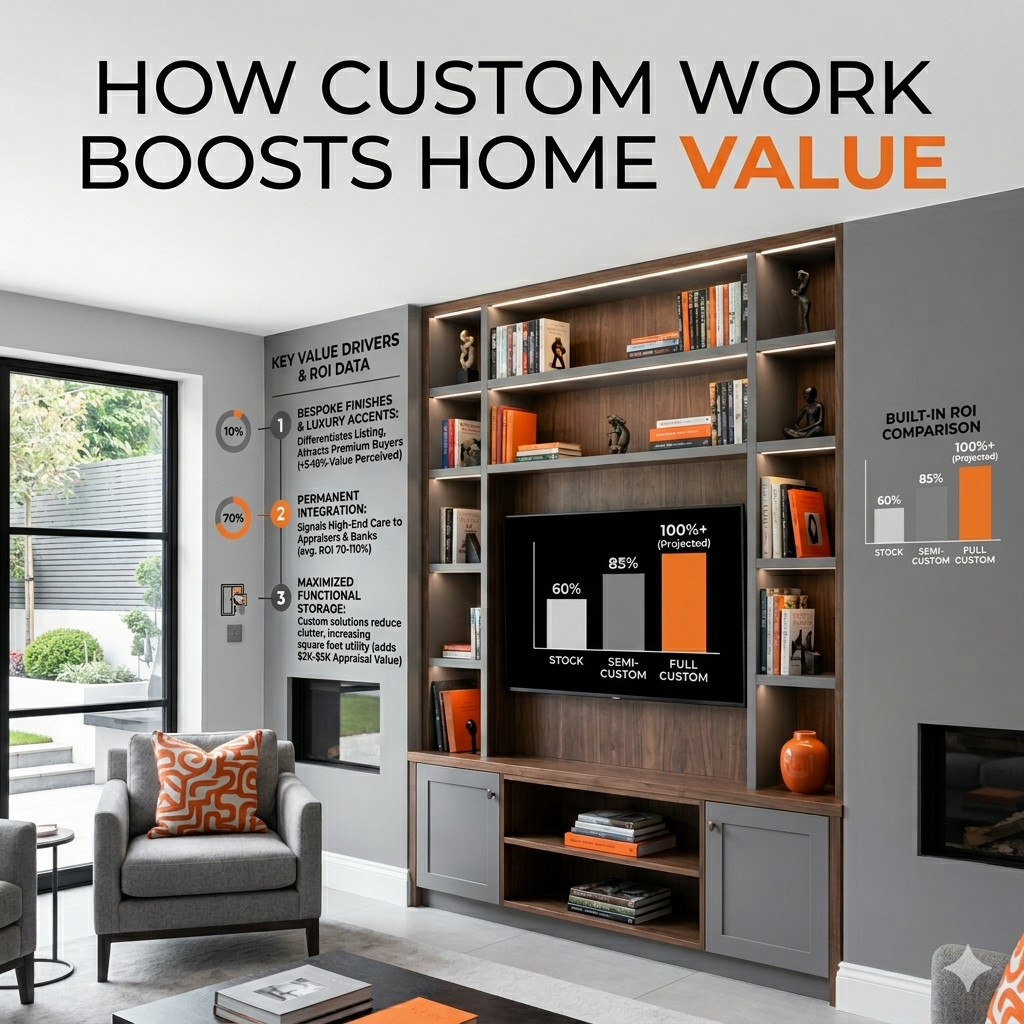
Custom craftsmanship can boost resale value by making a home feel better-built, more functional, and more durable from day one. You’re not just adding finishes; you’re specifying performance. Buyers notice precise millwork, integrated storage, and maintenance-reducing systems. That’s why custom branding matters: it signals a cohesive, high-end design language. Adaptive insulation also adds value by improving thermal control and lowering operating costs.
- Tight tolerances improve perceived quality.
- Efficient layouts increase usable square footage.
- Material upgrades extend service life.
- Smart detailing supports long-term market appeal.
When you invest in custom work, you create measurable differentiation. In a competitive market, that distinction can translate into stronger offers, faster sales, and better appraisal support.
How to Choose the Right Builder
Choosing the right builder starts with verifying more than a license and a portfolio; you need a team that can execute exacting details, coordinate trades cleanly, and communicate clearly throughout the build. You should evaluate builder selection by reviewing recent projects, asking about tolerances, sequencing, and change-order control, and confirming that they understand custom craftsmanship at the structural and finish levels. Look for documented schedules, transparent budgets, and digital tools that let you track progress in real time. In New Hampshire, you also need a builder who can handle climate-driven performance requirements, from air sealing to moisture management. Ask how they solve problems, not just how they present plans. The right partner will translate your vision into a precise, innovative home without sacrificing reliability.
Frequently Asked Questions
How Long Does a Custom Craftsmanship Project Usually Take to Complete?
You can expect a custom craftsmanship project to take anywhere from several weeks to several months, depending on scope, complexity, and material lead times. You’ll set clear timing expectations during planning and allow extra time if renovation integration is involved. Precise detailing, engineered assemblies, and custom fabrication can extend schedules while delivering innovative, high-performance results. Your contractor should provide milestone-based updates and a realistic completion forecast.
Can Custom Craftsmanship Be Added During Later Renovations?
Yes, you can add custom craftsmanship during later renovations, and you’ll often see the biggest gains in focal points. In one 1920s remodel, we transformed a plain hall into a signature path with custom staircases and decorative ceilings, like upgrading a circuit board with precision components. You can integrate millwork, trim, and built-ins without having to rework everything. Plan carefully, though, because structure, code, and tolerances’ll drive the final design.
What Maintenance Do Handcrafted Details Typically Require?
Handcrafted details typically need routine cleaning, periodic inspection, and timely touch-ups. You should follow maintenance schedules for custom finishes, checking sealants, joints, hardware, and coatings for wear, moisture intrusion, or fading. You’ll extend performance by using approved cleaners, controlling humidity, and refinishing exposed surfaces before damage spreads. Precision care preserves dimensional accuracy, surface integrity, and aesthetic consistency, ensuring your bespoke elements continue to perform at a high level.
How Does Custom Craftsmanship Affect Energy Efficiency?
Custom craftsmanship boosts energy efficiency by tightening the building envelope, reducing air leakage, and improving thermal continuity. You can specify precision-fit framing, advanced insulation detailing, and high-performance glazing to minimize heat loss and gain. Custom material sourcing lets you select components with lower embodied energy and better hygrothermal performance. That means you’ll cut utility loads, stabilize indoor temperatures, and integrate innovative systems more effectively without sacrificing durability or architectural intent.
Are Custom Finishes Harder to Repair Than Standard Finishes?
Yes—custom finishes can be harder to repair than standard finishes, like matching a rare thread in a woven fabric. You’ll often face repair challenges because custom finishes may use unique materials, specialty coatings, or exact color blends. That precision boosts innovation and aesthetics, but it also requires skilled technicians, tighter sourcing, and careful documentation. Standard finishes usually offer faster, more predictable repairs and simpler part replacement.
Conclusion
You want a house that stands up to New Hampshire winters and still feels personal every day. Custom craftsmanship gives you both: durable materials, precise fit, and details tailored to your routine. That’s the contrast that matters—mass-produced shortcuts may lower upfront cost, but custom work raises comfort, performance, and long-term value. When you choose the right builder, you don’t just get new construction; you get a home built to work hard and live well.